


























News Releases & Statements
Filters
Clear Filters
Requires Login
-
 CLIA Statement regarding Tourism Management Measures in Greece
CLIA Statement regarding Tourism Management Measures in Greece
The cruise sector is a success story for Greece contributing 1.4 billion euros to the economy in 2022. CLIA has long called for more investment in port infrastructure and worked with destinations to implement efficient planning for cruise ship berthing. Any increase in the existing port fee should be fit for purpose, proportionate to the specific port investment needs, and apply across all visitors, with revenues directly reinvested into port operations and the local communities.The cruise industry is keen to continue its close cooperation with the Greek Government to support sustainable tourism activities in the country. CLIA is hoping that any new measures imposed by the Government will be developed in close consultation with the impacted municipalities, ports and tourism stakeholders locally whose livelihoods depend on cruise tourism.Notes to EditorsWe value the strong partnership between the cruise sector and Greece and have called repeatedly for more investment in port infrastructure which benefits the local communities and visitors. Any increase in the existing port fee should be fit for purpose, proportionate to the specific port investment needs, and apply across all visitors. It should also be introduced with sufficient advance notice. Fee revenues should be directly reinvested into port operations to ensure the benefits are felt by the local communities and visitors.The fee should be benchmarked against other port fees in the Mediterranean region, to ensure the Greek ports remain attractive and competitive. Port fees are also regulated by European and national legislation and should align with these principles.We also note the Government’s intent to address tourism management issues during the peak season in some destinations with a potential variation of the fee level.CLIA questions the singular focus on cruise tourism for this proposal. To truly find solutions to tourism management requires a holistic response. Cruise calls are planned years in advance, which allows for use of flow management measures. Indeed, such measures have already been implemented in coordination with local municipalities in Santorini and Mykonos, including berth management systems.CLIA and member cruise lines will continue to work in close cooperation with local authorities to make sure that real and impactful measures are being adopted to strengthen tourism management for a longterm sustainable tourism industry, which benefits visitors and residents alike.CLIA is hoping that any new measures imposed by the Government will be developed in close consultation with the impacted municipalities, ports and tourism stakeholders locally whose livelihoods depend on cruise tourism.ENDSContact: Julie Green: [email protected] 11 September, 2024 -
 Cruise industry data shows continued progress toward sustainability goals
Cruise industry data shows continued progress toward sustainability goals
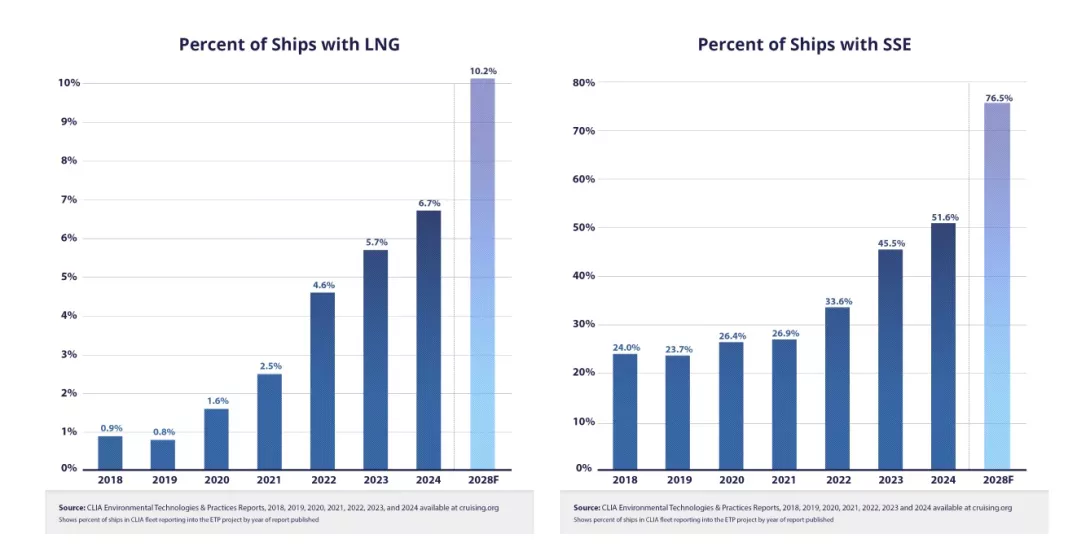
WASHINGTON, DC - 7 September 2024 - Cruise Lines International Association (CLIA), the leading voice of the global cruise industry, today released its annual Global Cruise Industry Environmental Technologies and Practices Report, showing continued progress by the sector in advancing its environmental and sustainability agenda, including investments in ships and technologies for the uptake of transitional and alternative fuels.“Cruise lines are continuing to reduce their emissions at sea and at berth in pursuit of net zero emissions by 2050,” said Kelly Craighead, President and CEO of Cruise Lines International Association. “This year’s environmental technologies report demonstrates their progress, with the industry investing in engine technologies with conversion capabilities that will allow ships to use more renewable energy sources as they become available and making important incremental steps to employ a range of other environmental technologies and practices to advance the industry’s wider sustainability initiatives.”Highlights from the industry’s 2024 Environmental Technologies and Practices Report include:Fleet ProfileThe CLIA member ocean fleet includes 303 ships and a total capacity of 635,000 lower berths operated by 45 cruise line brands representing 90% of capacity — an increase of 3.6% and 3.34% respectively, compared to the prior year.Analysis of the current CLIA member cruise line fleet indicates that the majority of ocean-going ships operated by CLIA member cruise lines are small to mid-size ships, with ship size distribution across the fleet as follows:35% of ships are small ships (fewer than 1,000 lower berths)38% of ships are mid-size ships (1,000 to fewer than 3,000 lower berths)26% of ships are large ships (upwards of 3,000 lower berths)Fuel FlexibilityCLIA member cruise lines are investing in new ships and engines that allow for fuel flexibility. This includes capability to use renewable biodiesel, investments in the capability to use green methanol when available, and liquified natural gas (LNG). Ships designed with engines and fuel supply systems able to operate on LNG will be able to switch to zero and near-zero fuels such as bio or synthetic LNG in the future, with no engine modifications.19 ships (representing 7% of the fleet and 13% of the fleet’s global capacity) are using LNG for primary propulsion.LNG has virtually zero sulfur emissions and particulate emissions, reduces NOx emissions by approximately 85% and achieves up to a 20% reduction in GHG emissions. Multiple reports confirm that methane slip (small amounts of escaped methane) – an acknowledged issue with LNG engines – is on a path to be nearly eradicated, with some industry stakeholders claiming that slip values of less than 1% is achievable within the next few years.Selective Catalytic Reduction Technology (SCR)71 ships, representing 25% of the fleet and more than 20% of global capacity, have SCR systems — an increase of 34% from 2023.Selective Catalytic Reduction technology (SCR) reduces particulate matter and nitrogen oxide emissions, thus helping ships to meet IMO Tier III classification standards for nitrogen oxide emissions (NOx).Onshore Power Supply (OPS)—also referred to as Shoreside Electricity (SSE) CapabilityPlugging in to OPS when ships are in port allows ships’ engines to be switched off, achieving significant overall pollutant emissions reductions of up to 98%, depending on the mix of energy sources, according to studies conducted by a number of the world’s ports and the U.S. Environmental Protection Agency.Across the CLIA cruise line member fleet:147 ships are able to connect to OPS (52% of the total number of ships and 61% of capacity) — 23% more than the prior year and 167% more since 2018.By 2028, 239 ships that are able to connect to OPS are expected to be in service (based on the number of ships scheduled to be retrofitted and new ships on the order book specified for OPS connectivity). This includes 64 ships currently in service and each of the 28 CLIA member cruise ships on the 2024- 2028 order book — all of which are specified for OPS connectivity.CLIA champions the advancement of onshore power infrastructure as an important component in the industry's work to reduce emissions and supports continued development of cost-effective infrastructure for clean shoreside electricity in cruise ports when the net impact delivers an overall emission reduction.Currently 35 of the ports worldwide where cruise ships call (fewer than 3%) have a cruise berth with OPS.22 additional cruise ports are funded for OPS infrastructure and 16 cruise ports are planning to install OPS — a total of 38 ports.In 2022, CLIA announced that its ocean cruise line members made a commitment that all ships calling at ports capable of providing OPS will be equipped to either use shore power by 2035 or be able to use alternative low-carbon technologies, as available, to reduce emissions in port.As part of the EU’s Fit for 55 decarbonization regulations, by 2030 major ports in Europe will be required to have shoreside power, which will further accelerate port infrastructure investment in that region.Advanced Wastewater Treatment Systems (AWTS)The majority of CLIA member cruise ships sailing today utilize advanced wastewater treatment systems (AWTS), which are capable of exceeding MARPOL Annex IV requirements and perform better than shoreside treatment plants in some coastal cities. In addition, as part of their overarching sustainability focus, cruise lines have committed to not release untreated sewage anywhere in the world during normal operations.Across the CLIA cruise line member fleet, 225 ships (80% of the total, representing 84% of global passenger capacity) are equipped with AWTS (an 11% increase from 2023 and a 65% increase from 2018).More than one-third of the ships equipped with AWTS are capable of meeting the more stringent wastewater release standards of the Baltic Sea Special Area.Freshwater ProductionThe majority of CLIA members produce their own fresh water onboard their ships, with 267 ships (representing more than 94% of reporting ships and 96% of global capacity) able to do so — of which 172, nearly 60% of the fleet, are capable of producing enough water to match their total consumption.For more information, please visit https://cruising.org/en/environmental-sustainability. 07 September, 2024 -
 Indigenous culture takes the spotlight in New Wave magazine
Indigenous culture takes the spotlight in New Wave magazine
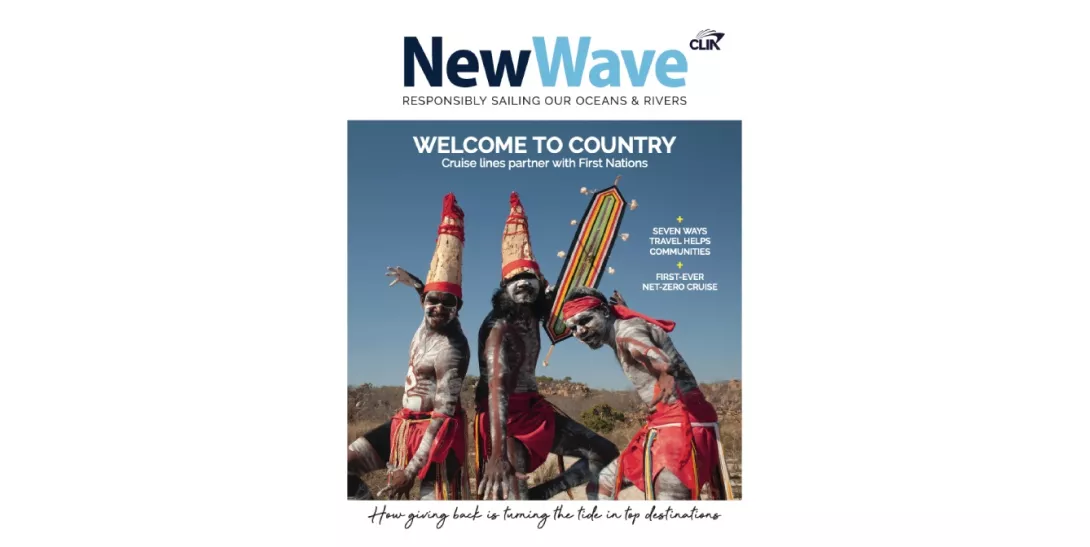
September 06, 2024 – Cruise Lines International Association (CLIA) and Big Splash Media have released the latest edition of their annual sustainability magazine New Wave, putting a focus on Indigenous tourism among cruise industry initiatives in destination stewardship and sustainability.The glossy magazine highlights some of the many ways cruise tourism brings social and economic opportunities to communities around Australia and New Zealand, as well as the role cruise lines are playing to support well-managed tourism worldwide. It also outlines the latest environmental advances being made by cruise lines as they work towards net-zero emissions by 2050.CLIA Managing Director in Australasia Joel Katz said the fourth edition of New Wave provided insight into some of the many initiatives underway among cruise lines to support the communities they visit.“Sustainability is the single most important issue across the global cruise sector, and this includes being a positive contributor to local communities in destinations around the world,” Mr Katz said. “Cruise lines bring enormous opportunities to the destinations they visit, and many of their initiatives are aimed at creating lasting benefits for local people and cultures.”The cover of this year’s New Wave celebrates the contribution of the Wunambal Gaambera Traditional Owners in the Kimberley region of northern Western Australia, who became the first Indigenous community to act as godparents to a major cruise vessel with the maiden visit of Seabourn Pursuit in July.“Australia’s rich Indigenous culture is being embraced in ways that provide extraordinary experiences for cruise visitors while at the same time creating opportunities for Traditional Owners,” Mr Katz said. “The Wunambal Gaambera are among a growing number of Indigenous people in Australia who are working with cruise lines to share culture with visitors while fostering tourism benefits within their community.”The latest edition of New Wave is the fourth produced in Australasia, outlining cruise line advances including the latest alternative fuels, new sources of clean energy and the latest initiatives to protect the marine environment.It also features wildlife protection projects, marine scientific studies, community development efforts and sustainable food supply initiatives.New Wave is available now and has been produced in partnership with Big Splash Media. It is distributed in the current edition of Cruise & Travel magazine and will be provided to CLIA member travel agents and industry stakeholders as part of CLIA’s Cruise Month initiative in October.The magazine can also be viewed and shared online via CLIA’s sustainability page. 06 September, 2024 -
 Cruise industry annual environmental technologies and practices data shows continued progress toward environmental sustainability goals
Cruise industry annual environmental technologies and practices data shows continued progress toward environmental sustainability goals
(WASHINGTON, DC -- 6 September 2024) - Cruise Lines International Association (CLIA), the leading voice of the global cruise industry, today released its annual Global Cruise Industry Environmental Technologies and Practices Report, showing continued progress by the sector in advancing its environmental and sustainability agenda, including investments in ships and technologies for the uptake of transitional and alternative fuels.“Cruise lines are continuing to reduce their emissions at sea and at berth in pursuit of net zero emissions by 2050,” said Kelly Craighead, president and CEO of Cruise Lines International Association. “This year’s environmental technologies report demonstrates their progress, with the industry investing in engine technologies with conversion capabilities that will allow ships to use more renewable energy sources as they become available and making important incremental steps to employ a range of other environmental technologies and practices to advance the industry’s wider sustainability initiatives.”Highlights from the industry’s 2024 Environmental Technologies and Practices Report include:Fleet ProfileThe CLIA member ocean fleet includes 303 ships and a total capacity of 635,000 lower berths operated by 45 cruise line brands representing 90% of capacity — an increase of 3.6% and 3.34% respectively, compared to the prior year.Analysis of the current CLIA member cruise line fleet indicates that the majority of ocean-going ships operated by CLIA member cruise lines are small to mid-size ships, with ship size distribution across the fleet as follows:35% of ships are small ships (fewer than 1,000 lower berths)38% of ships are mid-size ships (1,000 to fewer than 3,000 lower berths)26% of ships are large ships (upwards of 3,000 lower berths)Fuel FlexibilityCLIA member cruise lines are investing in new ships and engines that allow for fuel flexibility. This includes capability to use renewable biodiesel, investments in the capability to use green methanol when available, and liquified natural gas (LNG). Ships designed with engines and fuel supply systems able to operate on LNG will be able to switch to zero and near-zero fuels such as bio or synthetic LNG in the future, with no engine modifications.19 ships (representing 7% of the fleet and 13% of the fleet’s global capacity) are using LNG for primary propulsion.LNG has virtually zero sulfur emissions and particulate emissions, reduces NOx emissions by approximately 85% and achieves up to a 20% reduction in GHG emissions. Multiple reports confirm that methane slip (small amounts of escaped methane) – an acknowledged issue with LNG engines – is on a path to be nearly eradicated, with some industry stakeholders claiming that slip values of less than 1% is achievable within the next few years.Selective Catalytic Reduction Technology (SCR)71 ships, representing 25% of the fleet and more than 20% of global capacity, have SCR systems — an increase of 34% from 2023.Selective Catalytic Reduction technology (SCR) reduces particulate matter and nitrogen oxide emissions, thus helping ships to meet IMO Tier III classification standards for nitrogen oxide emissions (NOx). Onshore Power Supply (OPS)—also referred to as Shoreside Electricity (SSE) CapabilityPlugging in to OPS when ships are in port allows ships’ engines to be switched off, achieving significant overall pollutant emissions reductions of up to 98%, depending on the mix of energy sources, according to studies conducted by a number of the world’s ports and the U.S. Environmental Protection Agency.Across the CLIA cruise line member fleet:147 ships are able to connect to OPS (52% of the total number of ships and 61% of capacity) — 23% more than the prior year and 167% more since 2018.By 2028, 239 ships that are able to connect to OPS are expected to be in service (based on the number of ships scheduled to be retrofitted and new ships on the order book specified for OPS connectivity). This includes 64 ships currently in service and each of the 28 CLIA member cruise ships on the 2024- 2028 order book — all of which are specified for OPS connectivity.CLIA champions the advancement of onshore power infrastructure as an important component in the industry's work to reduce emissions and supports continued development of cost-effective infrastructure for clean shoreside electricity in cruise ports when the net impact delivers an overall emission reduction.Currently 35 of the ports worldwide where cruise ships call (fewer than 3%) have a cruise berth with OPS.22 additional cruise ports are funded for OPS infrastructure and 16 cruise ports are planning to install OPS — a total of 38 ports.In 2022, CLIA announced that its ocean cruise line members made a commitment that all ships calling at ports capable of providing OPS will be equipped to either use shore power by 2035 or be able to use alternative low-carbon technologies, as available, to reduce emissions in port.As part of the EU’s Fit for 55 decarbonization regulations, by 2030 major ports in Europe will be required to have shoreside power, which will further accelerate port infrastructure investment in that region.Advanced Wastewater Treatment Systems (AWTS)The majority of CLIA member cruise ships sailing today utilize advanced wastewater treatment systems (AWTS), which are capable of exceeding MARPOL Annex IV requirements and perform better than shoreside treatment plants in some coastal cities. In addition, as part of their overarching sustainability focus, cruise lines have committed to not release untreated sewage anywhere in the world during normal operations.Across the CLIA cruise line member fleet, 225 ships (80% of the total, representing 84% of global passenger capacity) are equipped with AWTS (an 11% increase from 2023 and a 65% increase from 2018).More than one-third of the ships equipped with AWTS are capable of meeting the more stringent wastewater release standards of the Baltic Sea Special Area.Freshwater ProductionThe majority of CLIA members produce their own fresh water onboard their ships, with 267 ships (representing more than 94% of reporting ships and 96% of global capacity) able to do so — of which 172, nearly 60% of the fleet, are capable of producing enough water to match their total consumption.Notes to Editors:The data tables for this year’s report can be found at Environmental Technologies and Practices CLIA Global Oceangoing Cruise Lines | CLIA (cruising.org).All data is based on CLIA’s annual Environmental Technologies and Practices report unless otherwise specified.For more information, please visit https://cruising.org/en/environmental-sustainability or contact us at [email protected]. 06 September, 2024 -
 Cruise industry calls on Government to overturn crippling NZ tourism tax
Cruise industry calls on Government to overturn crippling NZ tourism tax
August 21, 2024 – Cruise lines have called on the New Zealand Government to overturn plans for a 136% increase in cruise visitor fees, which threatens to accelerate an alarming downturn in cruise tourism around the country.Cruise Lines International Association (CLIA) today warned a multi-million dollar increase in border processing fees planned by New Zealand Customs would worsen a costs crisis that was already harming New Zealand businesses and local communities.“While cruise tourism is at record levels internationally, New Zealand destinations face a 22% fall in cruise visitors during the upcoming summer season, largely due to high costs and regulatory complexities,” said Cruise Lines International Association (CLIA) Managing Director in Australasia Joel Katz.“Cruise lines have been forced to reduce their deployments in New Zealand, which is now one of the most expensive destinations in the world for cruise operations,” Mr Katz said. “Even before this Customs increase, New Zealand communities are facing estimated losses of at least $157 million in reduced tourism over the 2024/25 season.”Mr Katz said the New Zealand Customs Service proposal would add millions of dollars in costs to cruise operations, despite warnings from cruise lines that existing costs had become prohibitive.“New Zealand is one of the most desirable cruise destinations in the world and cruise lines have invested heavily over many years to develop international cruise operations in local waters,” Mr Katz said. “Cruise tourism is ordinarily worth more than $500 million a year to communities around the coast of New Zealand, but this is now threatened by a succession of exorbitant cost increases by ports and government agencies.”CLIA and its cruise line members have called on the New Zealand Government to intervene in the planned Customs fee increase and adopt a whole-of-government strategy to foster a well-managed cruise tourism economy. CLIA has welcomed the National Cruise Strategy announced recently by the New Zealand Cruise Association (NZCA), which aims to increase the economic and social benefits of cruise tourism through collaboration between government, ports and destinations, tourism operators and cruise lines. 21 August, 2024 -
 New Zealand travellers are ready to set sail
New Zealand travellers are ready to set sail
August 15, 2024 – New Zealand travellers are primed for their next ocean cruise – led by younger generations who show the strongest sentiment towards cruising, according to Cruise Lines International Association (CLIA).Consumer research conducted last month on behalf of CLIA shows that among New Zealanders who have cruised previously, 81% say they will cruise again – a figure equal to the average across top cruise markets internationally.Among New Zealand travellers who have never cruised before, 74% said they were open to taking their first holiday at sea – well above the international rate of 68%,The figures were announced today by CLIA Managing Director in Australasia Joel Katz, who addressed the New Zealand Cruise Association (NZCA) conference in Auckland.“These are very positive figures – as strong as any in the world – and they show that New Zealanders are just as passionate about cruising as people in some of our largest cruise markets internationally,” Mr Katz said.“Even among New Zealand travellers who have never cruised before, sentiment is very strong and well above the world average,” he said. “This shows that Kiwis are encouragingly receptive to cruising.”Mr Katz said sentiment was strongest among younger New Zealanders, reflecting a worldwide trend driven by new generations heading to sea.“Younger cruisers in New Zealand reported a higher-than-average intention to cruise,” Mr Katz said. “Among Millennial cruisers, 86% said they will cruise again, while among Gen Z cruisers, 87% said they will cruise again.”Previous figures released by CLIA show the average age of a New Zealand cruise passenger was 49.3 years in 2023, down from 52.4 years in 2019.In his address to the NZCA, Mr Katz highlighted the positive global outlook for the cruise industry, which is forecast to welcome record numbers of passengers internationally during 2024.He outlined the industry’s efforts in pursuit of its emissions goals – including work to perfect sustainable energy sources like biofuels, methanol, hydrogen fuel cells, electric batteries and hybrid systems – and highlighted the industry’s initiatives in responsible tourism management and destination stewardship. 15 August, 2024 -
 Charting the future of sustainable cruise travel: Update
Charting the future of sustainable cruise travel: Update
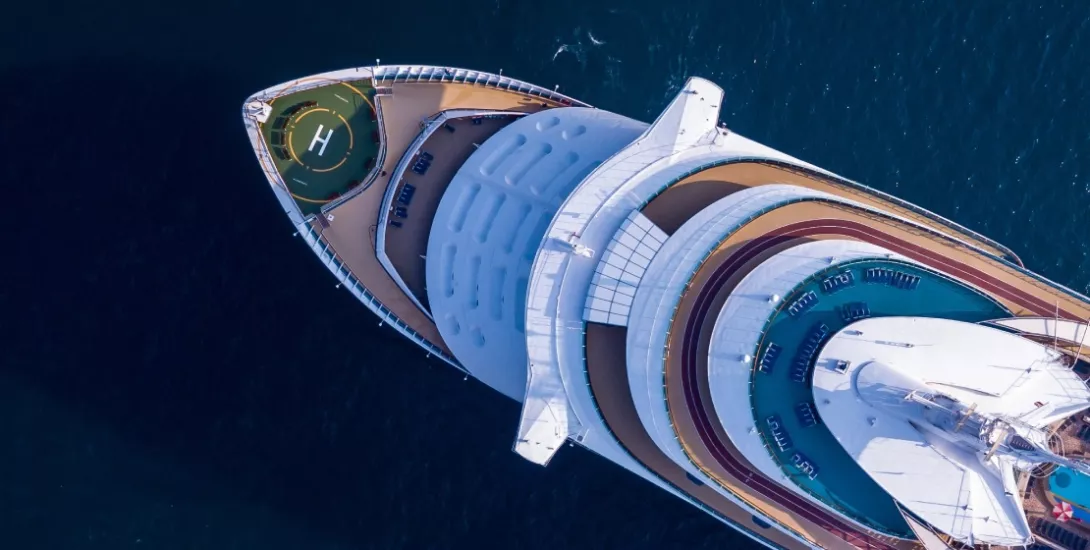
Over the past two decades the cruise industry has made significant progress in reducing emissions as it pursues its goal of achieving net-zero emissions by 2050, consistent with the International Maritime Organisation (IMO) Strategy on Reduction of Greenhouse Gas Emissions from Ships.Multiple reports demonstrate the step change taking place towards this target – with concrete progress being made across a fleet of ships that are diverse in their design and range of experiences available onboard and onshore.The vast majority of ships sailing today – and scheduled to be in service well into the next decade as new ships come online – are small to mid-sized ships. They are also part of a global fleet that is more energy-efficient than ever. Cruise lines publicly report CO2 emissions every year as part of EU obligations, showing a 16% average reduction per ship since 2019.Read our latest update on how the industry is charting the future of sustainable cruise travel.Read the full CLIA briefing update 08 August, 2024 -
 CLIA meets Minister of Maritime Affairs & Insular Policy of Greece amidst cruise season 2024
CLIA meets Minister of Maritime Affairs & Insular Policy of Greece amidst cruise season 2024
Athens, 1 August 2024 – Represented by Marie-Caroline Laurent, Director General of CLIA in Europe, and Maria Deligianni, CLIA’s Regional Director for the Eastern Mediterranean, CLIA met Mr. Christos Stylianides, Minister of Maritime Affairs and Insular Policy of Greece. The meeting reaffirmed the constructive dialogue between CLIA and the Ministry and a mutual commitment to cooperate towards the sustainable development of the cruising industry in Greece.“Greece is a destination cruise market of major importance in Europe, and we wish to continue working together with the Greek government to protect the country’s uniqueness, to be a great place to live and to travel. Concretely, we first recognized this need last year when we launched CLIA’s cruise industry Action Plan for Greece, which aims to address challenges and opportunities for the sector for our mutual benefit”, said Marie-Caroline Laurent.Maria Deligianni added, “Recently, thegrowth of tourism in Greece has garnered significant attention, particularly concerning the islands of Santorini and Mykonos. We were pleased to inform the Minister of our proactive engagement with local authorities to enhance cruise tourism practices and develop sustainable tourism strategies for these islands. This includes the commitment by CLIA cruise lines to uphold the daily cruise cap of 8,000 passengers in Santorini and the establishment of a berth allocation systemin Mykonos, a priority for ports experiencing high levels of cruise traffic.”Considering that 57% of cruise tourism in Greece (according to 2023 data) takes place in Piraeus, Santorini, and Mykonos, CLIA discussed with the Minister and the Secretary General of the Aegean and Insular Policy, Mr. Manolis Koutoulakis, the potential for expanding to new destinations elsewhere in Greece. CLIA confirmed the strong interest of cruise companies inenrichingtheir itinerarieswithadditional Greekdestinations given the vast range of opportunities on offer.The improvement and upgrade of port infrastructure and port serviceswas also discussed, and it was noted that homeporting activities represent a great economic opportunity for the country, with around 70% of vessels calling in Greek ports homeporting this yearThe discussion also addressed the importance of the cruise line industry for European shipbuilding, with around 80% of the value of the orderbook of European shipyards represented by cruise ships. The recent revitalization of the Greek shipyards can represent a positive opportunity for the Greek economy with potential business opportunities in the cruise sector including, retrofit, maintenance and refurbishment.Focusing on the decarbonization of the cruise sector, CLIA shared that it has commissioned a “Cruise Investment Plan”, a study which will identify the needs for port infrastructure, and alternative fuelsto achieve our decarbonization goals, to be completed in early 2025.CLIA also emphasizedthe need for a carefully considered adjustment periodin the increase of port dues in Greek ports and for revision of thenational law concerning tender boat operations.The implementation of the EU Regulation establishing an Entry/Exit System (EES) to register entry and exit data and refusal of entry data of third-country nationals crossing the external borders of the Member States, which will enter into force in November this year, was also discussed during a meeting of the CLIA representatives with the Border Protection Directorate of the Greek Ministry of Civil Protection.Marie-Caroline Laurent and Maria Deligianni also met with the newly appointed CEO of Piraeus Port Authority, Mr. Su Xudong, as well as with the CEO of Posidonia, Mr. Theodore Vokos, with whom they discussed the next Posidonia Sea Tourism Forum, scheduled to take place in Heraklion on May 6-7, 2025. 05 August, 2024 -
 CLIA congratulates Wunambal Gaambera Traditional Owners
CLIA congratulates Wunambal Gaambera Traditional Owners
July 1, 2024 – Cruise Lines International Association (CLIA) has congratulated the Wunambal Gaambera Traditional Owners as they become the godparents of the new expedition cruise ship Seabourn Pursuit, marking a historic first in the cruise industry.The Wunambal Gaambera of Western Australia’s Kimberley region became the first Traditional Owners to act as godparents of a major cruise vessel at a ceremony on the weekend, highlighting a focus on preserving the cultural heritage and natural beauty of the destinations cruise ships explore. The Wunambal Gaambera are Traditional Owners of a region that includes the sea country of Ngula Jar Island (Vansittart Bay) and Yirinni (Hunter River), and the freshwater country of Ngauwudu (Mitchell Plateau).CLIA Managing Director in Australasia Joel Katz said the Wunambal Gaambera were among several Traditional Owners in Australia who were working with cruise lines to share culture with visitors while fostering tourism benefits within their communities.“Australia’s rich Indigenous culture is being celebrated in ways that provide extraordinary experiences for cruise visitors while at the same time creating opportunities for Traditional Owners,” Mr Katz said. “The Wunambal Gaambera partnership is a great example of how cruise tourism can be harnessed by remote communities around Australia’s coast.”As part its partnership with the Traditional Owners, Seabourn will make a donation to assist Wunambal Gaambera to develop a self-sustaining industry, producing authentic works of art and craft by Wunambal Gaambera artists to sell. In addition, Seabourn will also supply the Wunambal Gaambera Aboriginal Corporation with various art supplies to foster sustainable, commercial arts and craft initiatives, and will work alongside Wunambal Gaambera Traditional Owners as they share their Wanjina Wunggurr culture.Contributions by cruise lines, along with funding from Tourism Western Australia, contribute to development of tourism facilities and products for Traditional Owners to live on their country during the dry season when tourism operators can access the vast coastline of the Kimberley region. 01 July, 2024 -
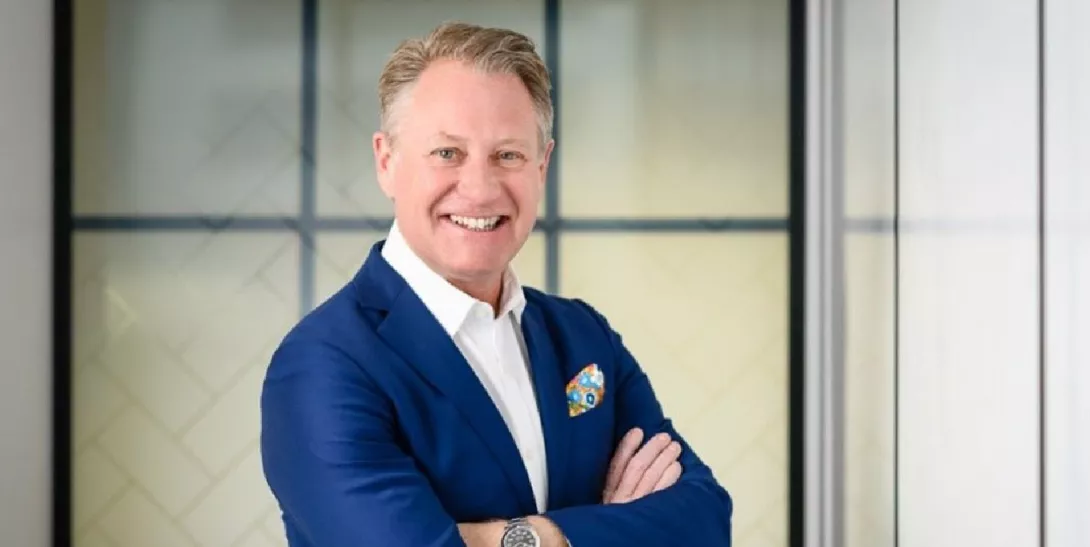 Peter Little elected Chairman of CLIA in Australasia
Peter Little elected Chairman of CLIA in Australasia
June 5, 2024 – Cruise Lines International Association (CLIA) has announced the election of Carnival Senior Vice President and Country Manager Peter Little as its new Chairman in Australasia.Mr Little takes over from Norwegian Cruise Line APAC Vice President & Managing Director Ben Angell, who has concluded his two-year term as the head of CLIA’s Australasian board.CLIA Australasia Managing Director Joel Katz said Mr Little would provide important stewardship at a time when the resurgent cruise industry was working hard to cement its long-term success.“Peter is a respected industry leader who has been integral to the strength of the Australian cruise sector for many years,” Mr Katz said. “He has shouldered responsibility for a very broad and complex range of maritime operations throughout his career and commands a great deal of admiration from across the cruise fraternity.”Mr Little said he was proud to step into the role of CLIA Chairman in Australasia at a time of enormous energy within the cruise industry.“It is an honour and a privilege to be appointed CLIA Australasia Chair,” Mr Little said. “The role of CLIA is crucial to steering the industry’s path to the future. CLIA’s leadership and advocacy functions across the sector are vital to securing the benefits cruise tourism delivers across the economies of Australasia.”Mr Katz thanked Mr Angell for his dedication to CLIA over recent years and paid tribute to his work as Chairman during a period of positive renewal.“Ben Angell has brought his considerable energy and enthusiasm to CLIA at a time when our industry has shone like never before,” Mr Katz said. “He has not only presided over our organisation during cruising’s rapid revival in Australasia but has also taken a hands-on role in building the strength and membership of CLIA across this region. We are grateful for his guidance, and he will continue to play an important role in CLIA’s success into the future.”As CLIA Chairman in Australasia, Mr Little leads an Executive Committee that also comprises Stuart Allison (Senior Vice President - Asia Pacific, UK & Europe, Princess Cruises), Ben Angell (Vice President & Managing Director, Norwegian Cruise Line APAC), Lynne Clarke (Chairman, MSC Cruises Australia), Deb Corbett (Chief Executive Officer Asia Pacific, PONANT), Andrew Millmore (Executive Chairman, Travel the World Group, representing Windstar and Virgin Voyages), Gavin Smith (Vice President & Managing Director Australia, Royal Caribbean Cruises Ltd), and Jason Worth (Vice President, International Sales, Oceania Cruises). 05 June, 2024