


























News Releases & Statements
Filters
Clear Filters
Requires Login
-
 Commissioner Tzitzikostas and MEPs engage with the travel and tourism industry for a sustainable and resilient future
Commissioner Tzitzikostas and MEPs engage with the travel and tourism industry for a sustainable and resilient future
Brussels, 10 December 2024 — Today, 10 leading European travel and tourism organisations convened in the European Parliament for a high-level meeting with Apostolos Tzitzikostas, Commissioner for Sustainable Transport and Tourism, MEP Daniel Attard and other Members of the Tourism Task Force, as well as European Commission and EU Member States representatives. This meeting builds on the work initiated in Rhodes earlier this year, continuing efforts to foster collaborative dialogue between industry leaders and policymakers, with a focus on advancing the sector’s efforts towards enhanced sustainability, resilience and effective climate change mitigation.The event follows the landmark Joint Declaration EU Tourism: Resilience in the Climate Crisis Era signed in April 2024 by the coalition of 10 industry organisations. Launched in Rhodes, the Declaration spells out the industry’s commitment to decarbonisation, enhancing cross-sector collaboration and deepening engagement with policymakers to achieve a sustainable and competitive future for the travel and tourism sector.On this special occasion, Commissioner Tzitzikostas highlighted the critical role of tourism in Europe and pledged to introduce a Sustainable Tourism Strategy as well as appropriate EU funding to help the sector adapt and mitigate the impacts of climate change.During the discussions, industry representatives detailed their progress towards emission reduction targets. They emphasised the concrete steps being taken to support environmental commitments and drew attention to important challenges for an effective and timely transition.Travel and tourism leaders stressed the importance of maintaining open dialogue between public and private sectors, with the aim of clarifying and reducing compliance reporting requirements, identifying funding opportunities, and sharing effective best practices across industries.MEP Daniel Attard (S&D, Malta), Member of the Tourism Task Force Steering Group, stated: “The climate-related legislative packages have been adopted, and now our focus must shift to implementation. Sustainable targets are essential, but we must also safeguard the competitiveness of the industry. Economic growth and sustainability can and must go hand in hand. It is vital that our policies deliver tangible benefits for workers, businesses, and the environment alike.”Alexandros Vassilikos, President of HOTREC, on behalf of the Coalition, commented: “The industry has already demonstrated its commitment to sustainability through substantial investments across multiple areas. From advancing sustainable aviation fuels and developing energy-efficient technologies to creating comprehensive sustainability certifications and robust emissions measurement methodologies, we have laid the groundwork for meaningful change. Yet, we recognise that realising our full potential requires significant policy support, targeted funding, and engagement with policymakers to ensure that our smallest businesses, the true backbone of our sector, can fully participate in this transformative journey.”Today’s meeting sets the stage for a closer partnership between policymakers and the travel and tourism sector, ensuring that shared goals for a sustainable and resilient future can be achieved together.–ENDS–The organisations mentioned below endorsed the Joint Declaration:Airlines for Europe (A4E)Airports Council International (ACI EUROPE)Cruise Lines International Association (CLIA)European Travel Agents’ and Tour Operators’ Association (ECTAA)European Exhibition Industry Alliance (EEIA)European Regions Airline Association (ERA)European Association of Hotels, Restaurants and Cafes (HOTREC)The Global Association for the Attractions Industry (IAAPA)International Road Transport Union (IRU)European Federation of Rural Tourism (RURALTOUR) 11 December, 2024 -
 “Made in Europe” cruises generated 55 billion Euros across the continent in 2023
“Made in Europe” cruises generated 55 billion Euros across the continent in 2023
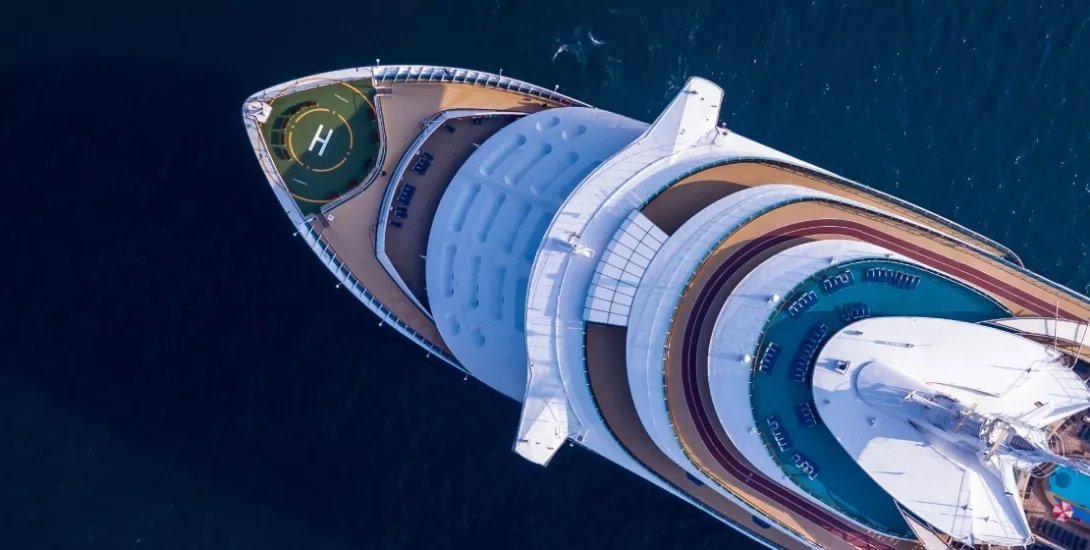
CLIA report: 97% of the world’s ocean cruise ships are built in EuropeBy 2036, companies will invest 57 billion euros in European shipyardsLong and complex cruise supply generate generates 400,000 jobs in EuropeBrussels, 10th December 2024 – the cruise industry is a ‘made in Europe’ supply chain which generated 55.3 billion euros and 400,000 jobs in Europe in 2023. This is what emerges from newly released data by Cruise Lines International Association. Furthermore, in the next 12 years, with an investment of 57 billion euros, 72 of the 76 ocean cruise ships will be built in European shipyards (97%) of which 40 in Italy (52.6%), 12 in Germany (15.8%) and 10 in France (13.2%).Cruise ships represent 80% of the value of commercial ship orders for European shipyards and involves European companies across the entire value chain, from suppliers of steel hull plats to hi-tech onboard equipment, to interior design.“Europe is world leading in complex and innovative shipbuilding, and our sector is a key part of this European maritime transport industrial cluster,” says Samuel Maubanc, Director General, Europe, CLIA. “As almost all the world’s cruise ships are built in European shipyards, the cruise sector is central to Europe’s ability to maintain this industrial excellence, competitiveness, and resilience. Cruise is also a driver of innovation, investing in the development and use of new technologies and sustainable energy solutions that will apply across the maritime sector in future.”These are fundamental records for Europe’s maritime security and strategic autonomy. The economic impact of cruise tourism does not end with the launch of a ship but continues for decades, multiplying the construction value of the ship itself in the area. According to CLIA, there are more than 350 ports in Europe, and every time a ship docks in one of them it generates development for the coastal communities and suppliers in the area, also as companies are committed to supporting local products. Cruise passengers are a source of direct spending, which on average almost 700 euros per passenger in port cities during a seven-day cruise.Furthermore, more than 50% of cruise passengers return to visit the locations in subsequent years, showing the longer-term impact of cruise. To this is added the companies’ spending on supplies, (11.3 billion euros per year), in shipyards (8.2 billion euros per year) and on wages (7.6 billion euros per year).EndsNote to the editor: Follow the link to have access to the full Made in Europe report and see how the industry is critical to Europe’s maritime strategic autonomyFor additional information, Press inquiries:Contact: Philomène Bouchon: pbouchon 10 December, 2024 -
 Study Shows the Highest-Ever Global Economic Impact from Cruise Tourism
Study Shows the Highest-Ever Global Economic Impact from Cruise Tourism
November 12, 2024 (Washington, DC) – Cruise Lines International Association (CLIA), the leading voice of the cruise industry, shared highlights from the association’s new 2023 Global Economic Impact Study last week at the annual CLIA Cruise Forward conference in Miami. The study revealed the highest-ever global economic impact from cruise tourism and reaffirmed that 2023 surpassed 2019 as the benchmark year for cruise industry performance. The report also confirmed the cruise sector’s role as a robust job creator.In 2023, the cruise industry generated $168.6 billion in total economic impact globally, a 9% increase over 2019. Moreover, this growth in economic activity was accompanied by an increase in industry-supported jobs. According to the study, the cruise industry contributed 1.6 million incremental jobs in 2023 and paid $56.9 billion in wages, representing growth over 2019 of 37% and 13%, respectively. 77% of these jobs were land-based. Cruise also contributes $85.6 billion to global GDP, with its growth outpacing that of the global economy.These latest figures reflect the steady evolution of the cruise industry, driven by the rising popularity of cruise vacations. 31.7 million passengers sailed in 2023, an increase of 7% from the 29.7 million that sailed in 2019.“The cruise industry is an important contributor to the global economy, generating billions of dollars in economic output and supporting millions of jobs,” said Kelly Craighead, president and CEO of CLIA. “As demand for cruising continues to grow, our member cruise lines are committed to preserving the integrity, cultural heritage and beauty of treasured destinations so they can be enjoyed by residents and visitors alike.”The contribution of cruise benefits multiple sectors, including transportation, aviation, food and beverage, lodging, manufacturing, technology, agriculture, travel agencies, and a robust supply chain.“The economic impact of the industry extends long after a cruise ends, as CLIA research shows that 60% of cruise passengers return to a destination they first visited on a cruise for a longer stay,” said Craighead.Highlights of CLIA’s 2023 Global Economic Impact Study can be viewed here. The full report, along with region specific studies for the United States, Europe and Canada will be posted on CLIA’s website in the coming month.As cruise continues to grow, so does the industry’s commitment to sustainable tourism and destination stewardship. Examples of the work being done by CLIA member lines to optimize cruise tourism in the destinations they visit are featured in CLIA’s new Guiding Principles for Responsible Tourism. The publication identifies the Sustainable Development Goals to which the industry is contributing and offers a framework for ongoing cooperation and joint activities between the cruise sector, ports, and destinations to help preserve the integrity, cultural heritage, and beauty of the world’s most treasured destinations for generations to come. 12 November, 2024 -
 New study reveals NZ$1.37 billion value of cruise tourism in Aotearoa New Zealand
New study reveals NZ$1.37 billion value of cruise tourism in Aotearoa New Zealand
November 1, 2024 – The full value of cruise tourism in New Zealand has been detailed for the first time in a new economic analysis, showing a total windfall of NZ$1.37 billion for communities around the country during the 2023-24 financial year.An economic impact assessment jointly commissioned by Cruise Lines International Association (CLIA) and the New Zealand Cruise Association (NZCA) provides the first detailed analysis of cruise tourism in Aotearoa, quantifying its full economic impact alongside the employment it supports.Announced today, the assessment shows NZ$1.37 billion in total economic output generated by cruise tourism in New Zealand during 2023-24. This included direct expenditure by passengers, crew and cruise lines worth NZ$637.8 million, as well as indirect/induced expenditure of NZ$729.2 million.It shows that cruise tourism supported a total employment of 9,729 New Zealand jobs last financial year and provided NZ$425.9 million in wages to New Zealand workers.CLIA Managing Director in Australasia Joel Katz said the assessment provided the first comprehensive picture of New Zealand’s cruise economy, expanding on the data produced in past years by StatsNZ. While past assessments have shown only direct expenditure by passengers, crew and cruise lines, this latest analysis also calculates the indirect and induced benefits that flow through the New Zealand economy, as well as the employment created.“Cruise tourism provides enormous economic benefits, not just in the major cities but also dispersed among regional ports and destinations around New Zealand,” Mr Katz said. “For the first time, we can now see the full value of New Zealand’s cruise economy, including the employment it creates around the country.”NZCA Chief Executive Officer Jacqui Lloyd said cruise ships had delivered NZ$439.5 million in passenger spending to virtually every region of New Zealand in 2023-24.“A cruise passenger spends an average NZ$283 every day on shore in New Zealand, but that’s only one piece of the picture,” Ms Lloyd said. “We also benefit from the spending of crew members and the spending of cruise lines to support their operations and provision their ships.”“Cruise tourism supports a huge variety of local Kiwi businesses like tour operators, travel agents, hotels and restaurants, retailers, transport providers and port operators,” Ms Lloyd said. “Cruising is also supported by an extensive supply chain, creating benefits for New Zealand farmers and food producers, winemakers, providores and maritime service providers.”Although the value of cruise tourism is high, the cruise industry has warned that rising costs and regulatory complexities are hampering the industry in New Zealand, leading to a fall in local cruise ship deployment.“While cruise tourism is thriving in the rest of the world, New Zealand is going backwards and local communities are facing a 20% reduction in visitor numbers over the coming season,” Ms Lloyd said. “New Zealand has become one of the world’s most expensive destinations for cruise operations, and this is already costing Kiwi businesses millions of dollars as ships head elsewhere.”The Value of Cruise Tourism economic impact assessment for New Zealand was prepared by AEC Group on behalf of CLIA and the NZCA. Its key findings for 2023-24 show:A total economic output of NZ$1.37 billion nationally, including direct* output of NZ$637.8 million and indirect/induced* output of NZ$729.2 million.Total employment of 9,729 people nationally, with total wages of NZ$425.9 million generated for New Zealand workers.A total of 21 New Zealand ports and destinations visited, welcoming 1,011 ship visits and 1.55 million passenger visit days.Total direct passenger expenditure of NZ$439.5 million and direct crew expenditure of NZ$23.5 million.An average passenger spend per day on shore of NZ$283 per person. Average crew spend per day on shore NZ$73.9 per person.The largest beneficiary of direct passenger expenditure was the retail shopping sector which received NZ$123.5 million, or 28.1% of passenger spending. Other beneficiaries included the food and beverage sector (NZ$109.6 million, 24.9%), shore excursion product (NZ$76.7 million, 17.4%), hotels and accommodation (NZ$57.6 million, 13.1%), transport providers (NZ$34.5 million, 7.9%), and entertainment (NZ$30.1 million, 6.9%).Direct cruise line expenditure totalled NZ$317.6 million, including NZ$146.2 million paid to ports and government as fees and charges (46.0% of cruise line spending).The North Island received the largest portion of cruise tourism, with a total economic output of NZ$981.9 million and total employment of 6,886 jobs.The South Island had a total economic output of NZ$385.0 million, supporting 2,843 jobs.The top regions for cruise tourism were:Auckland (inc Great Barrier Is, Tiritiri Matangi Is, Waiheke), NZ$604.7 million, 4,184 jobs;Otago (Dunedin), NZ$156.0 million, 1,155 jobs;Canterbury (inc Akaroa, Christchurch, Kaikoura, Timaru), NZ$135.2 million, 990 jobs;Bay of Plenty (inc Tauranga, Whakatane, Rotorua), NZ$111.8 million, 784 jobs; andWellington (inc Kapiti Island), NZ$100.1 million, 758 jobs.[Note: figures are available for other regions, including Gisborne, Hawkes Bay, Northland, Taranaki, Marlborough, Nelson and Southland].*Direct expenditure: total expenditure by passengers, crew, and cruise lines.**Indirect & induced expenditure: total expenditure generated by the spending of the direct expenditure, by businesses (indirect) and their employees (induced). 01 November, 2024 -
 Successful Destination Assessment for the City of Kotor
Successful Destination Assessment for the City of Kotor
The Global Sustainable Tourism Council (GSTC), Cruise Lines International Association (CLIA), the Municipality of Kotor, and the Port of Kotor in Montenegro joined forces for the destination assessment in the historic port city. The agreement was announced during CLIA’s Port and Destination Dialogue in Hamburg, Germany, last year.The GSTC Destination Assessment took place between September 2023 and July 2024 . It was conducted by the GSTC and co-funded by CLIA jointly with the Municipality and Port. The assessment process, which included local stakeholder consultation, helped the city identify priorities with respect to destination management as well as any potential gaps and key risks.Kotor is a key cruise destination in the Adriatic Sea. Nestled against stunning mountains, the city is designated as a UNESCO World Heritage Site. With a history that predates Homer, Kotor continues to embody the essence of its ancient past. The assessment aimed to set the foundation for a sustainability action plan for the city.The GSTC Destination Criteria (GSTC-D) covers four pillars of destination sustainability: destination policy and planning, community involvement and benefits, management of cultural assets, and management of environmental and natural resources.The GSTC Destination Assessor, Dr. Ioannis Pappas, conducted an assessment of current tourism activities and management approaches. The assessment included a 4-day onsite visit by the assessor, who interviewed relevant authorities and stakeholders to verify compliance with the GSTC-D through 8 stakeholder group meetings and 20 site visits, concluding on 64 key stakeholders participation, including representatives from national and local government, the private sector, NGOs, academia, and local residents. There was also a kick-off meeting with the mayor and an opening and closing workshop.Dr Ioannis Pappas, GSTC Director for the Mediterranean Region said “As the GSTC Assessor for Kotor, I commend the strong commitment of the local authorities and stakeholders in undertaking this important assessment. The collaboration between the Municipality of Kotor, the Port of Kotor, and CLIA has been invaluable in establishing a baseline against the GSTC Criteria. This assessment provides a clear understanding of Kotor’s current position and identifies the necessary actions to enhance sustainability performance in the coming years. By respecting its unique status as a UNESCO World Heritage site, Kotor is well-positioned to design strategies that preserve its cultural and natural assets while advancing sustainable tourism development.”“I want to congratulate the city and port of Kotor for the successful completion of the destination assessment. The beautiful city of Kotor has a unique cultural heritage, and this study will set the foundation for a sustainable action plan for the city.We are pleased to partner on this study as we believe that collaboration is key to responsible destination management. Cruise tourism brings positive social and economic benefits to communities, and we want to help destinations to manage tourism responsibly so that they remain great places to live and to visit,” said Julie Green, Deputy Director General, Europe, CLIA.Cruise tourism brings positive social and economic benefits to communities, and we want to help destinations to manage tourism responsibly so that they remain great places to live and to visitJulie Green, CLIA Deputy Director General, Europe“As the Mayor of Kotor, I am pleased to say that Kotor is one of the few cities in the region that has undergone an important sustainability assessment process as a tourist destination. Together with the Global Sustainable Tourism Council (GSTC) and CLIA, we brought together various stakeholders from public life to gather their input. All participants from public life, city government bodies, state authorities, universities, the civil sector, the economy, and entrepreneurs took part in this process. The assessment results provided us with a clear insight into the impact of tourism on our city, which will help us develop effective strategies for sustainable tourism – that is, how we should move forward regarding tourism. The study also helped us take a much more objective look at our problems, as well as our advantages. This assessment represents a significant step towards improving the quality of life in Kotor and preserving our destination.” said Vladimir Jokić, Mayor of Kotor.Ljiljana Popović Moškov, President of the Board of Directors of the LUKA KOTOR company, pointed out: “The Port of Kotor, as a socially responsible company, was very devoted partner on this important project creating the strategy for the sustainability of Kotor as a tourist destination. Our company wants to raise its services to the highest level of quality that it provides to shipping companies or cruise companies, and this project will help us greatly to do so. Kotor is a city under the protection of UNESCO and I want to express my gratitude to CLIA for recognizing the importance of our destination and including us in what is an extremely important project for us. We expect that implementation of project’s recommendations will be challenging as in its creation, but also in its realization, considering that Kotor is a city located in the most beautiful fjord in this part of Europe, has only 22,000 inhabitants, and with close to 500 cruise ship calls annually, bring over half a million passengers to our city.But no matter the challenges, the most important thing is that with this partnership with CLIA and Municipality of Kotor we want the same thing: to make Kotor a sustainable tourist destination and comfortable for the citizens in the long term. And I am convinced that we will succeed in that.”Download the full report of Kotor’s Destination Assessment here.More information about GSTC Destination Assessment is available here. 22 October, 2024 -
 Australian cruise tourism surges to record A$8.43 billion economic value
Australian cruise tourism surges to record A$8.43 billion economic value
October 18, 2024 – The value of cruise tourism in Australia has surged to a record high, generating A$8.43 billion for the national economy during 2023-24 while supporting more than 26,000 jobs around the country.An economic impact assessment jointly commissioned by Cruise Lines International Association (CLIA) and the Australian Cruise Association (ACA) shows a thriving cruise economy in Australia, driven by significant increases in passenger spending and cruise line outlays.Released today, the annual assessment shows A$8.43 billion in total economic output generated by cruise tourism in Australia during the 2023-24 financial year, a 49.7% increase over the previous year and the highest level ever recorded. It shows cruise tourism supported a total employment of 26,370 full time equivalent positions around Australia (up 44.7% from the previous year), with total wages of A$2.83 billion paid to Australian workers (up 55.8%).CLIA Managing Director in Australasia Joel Katz said cruise tourism had been booming as travellers embraced holidays at sea, but he warned future prosperity was being hampered by high costs and regulatory complexities in Australia.“Cruise tourism is thriving and passengers have been spending more when they step on shore, creating a record benefit for communities around the Australian coast,” Mr Katz said. “The number of Australians who benefit from cruise tourism is huge, from the travel agents who manage the passengers’ bookings through to the farmers who provide the local produce served on board.”“The value to the local economy is enormous, but the deployment of ships to this region is at risk of decline while Australia remains one of the world’s most expensive destinations for cruise lines,” Mr Katz said. “Rising fees and charges have combined with a complex regulatory environment, which reduces Australia’s competitiveness.”ACA Chief Executive Officer Jill Abel said cruise ships had visited 49 ports and destinations around Australia during 2023-24, bringing increases in visitor spending to every coastal state and territory.“Cruise ships made 1,650 visits to communities around the Australian coast in 2023-34, an increase of 5.1% on the year before,” Ms Abel said. “Together these destinations recorded almost 4.3 million passenger visit days over the financial year, an increase of 26.9%.”“The result is an enormous windfall for businesses like tourism operators, hotels and restaurants, retailers, transport providers and port operators,” she said. “In addition, passengers often return to destinations they initially discovered on a cruise, which creates added benefits for communities in the longer term.”The Value of Cruise Tourism economic impact assessment for Australia was prepared by AEC Group on behalf of CLIA and the ACA. Its key findings for 2023-24 show:A total economic output of A$8.43 billion nationally (up 49.7% over 2022-23), including direct output of A$3.38 billion and indirect/induced output of A$5.05 billion.Total employment of 26,370 full time equivalent positions nationally (up 44.7%), with total wages of A$2.83 billion (up 55.8%).A total of 49 Australian ports and destinations visited, welcoming 1,650 ship visits (up 5.1%).A total of 4.26 million passenger visit days (up 26.9%).A significant increase in turnaround passengers, the highest-spending visitors. Turnaround passenger visit days totalled 3.00 million (up 35.0%). Transit passenger visit days totalled 1.25 million (up 11.1%).Total direct passenger expenditure of A$1.94 billion (up 29.6%) and direct crew expenditure of A$60.4 million (up 16.0%).An average passenger spend per day on shore of A$455 per person (up 2.0%).Average crew spend per day on shore A$138 per person (up 0.7%).The largest beneficiary of direct passenger expenditure was the hotel and accommodation sector which received A$593.1 million, or 30.6% of passenger spending. Other beneficiaries included food & beverage (A$392.2 million, 20.2%), shore excursions (A$224.9 million, 11.6%), transport (A$285.7 million, 14.7%), retail shopping (A$211.8 million, 10.9%) and entertainment (A$75.4 million, 3.9%).Direct cruise line expenditure of A$1.59 billion (up 35.9%), including A$350.7 million paid to ports and governments (up 54.5%).New South Wales recorded the biggest benefit from cruising with a total economic impact of A$4.41 billion (up 60.4%), which supported 13,714 full time equivalent jobs.Queensland is the country’s second-largest cruise economy, with a total economic output of A$2.41 billion (up 43.1%), which supported 7,733 full time equivalent jobs.Victoria recorded a total economic impact of A$636.9 million (up 67.8%), which supported 1,893 full time equivalent jobs, followed by Western Australia (A$384.9 million, up 15.4%, and 1,211 jobs), South Australia (A$227.1 million, up 5.4%, and 738 jobs), Tasmania (A$176.0 million, up 22.1%, and 542 jobs) and the Northern Territory (A$181.4 million, up 42.5%, and 527 jobs).Download the Value of Cruise Tourism infographic. 18 October, 2024 -
 New 2023 Global Cruise Industry Economic Impact Study Shows the Highest-Ever Global Economic Impact from Cruise Tourism
New 2023 Global Cruise Industry Economic Impact Study Shows the Highest-Ever Global Economic Impact from Cruise Tourism
Cruise Economic Contribution Outpacing Global GDPNovember 12, 2024 (Washington, DC) – Cruise Lines International Association (CLIA), the leading voice of the cruise industry, shared highlights from the association’s new 2023 Global Economic Impact Study last week at the annual CLIA Cruise Forward conference in Miami. The study revealed the highest-ever global economic impact from cruise tourism and reaffirmed that 2023 surpassed 2019 as the benchmark year for cruise industry performance. The report also confirmed the cruise sector’s role as a robust job creator.In 2023, the cruise industry generated $168.6 billion in total economic impact globally, a 9% increase over 2019. Moreover, this growth in economic activity was accompanied by an increase in industry-supported jobs. According to the study, the cruise industry contributed 1.6 million incremental jobs in 2023 and paid $56.9 billion in wages, representing growth over 2019 of 37% and 13%, respectively. 77% of these jobs were land-based. Cruise also contributes $85.6 billion to global GDP, with its growth outpacing that of the global economy.These latest figures reflect the steady evolution of the cruise industry, driven by the rising popularity of cruise vacations. 31.7 million passengers sailed in 2023, an increase of 7% from the 29.7 million that sailed in 2019.“The cruise industry is an important contributor to the global economy, generating billions of dollars in economic output and supporting millions of jobs,” said Kelly Craighead, president and CEO of CLIA. “As demand for cruising continues to grow, our member cruise lines are committed to preserving the integrity, cultural heritage and beauty of treasured destinations so they can be enjoyed by residents and visitors alike.”The contribution of cruise benefits multiple sectors, including transportation, aviation, food and beverage, lodging, manufacturing, technology, agriculture, travel agencies, and a robust supply chain.“The economic impact of the industry extends long after a cruise ends, as CLIA research shows that 60% of cruise passengers return to a destination they first visited on a cruise for a longer stay,” said Craighead.Highlights of CLIA’s 2023 Global Economic Impact Study can be viewed here. The full report, along with region specific studies for the United States, Europe and Canada will be posted on CLIA’s website in the coming month.As cruise continues to grow, so does the industry’s commitment to sustainable tourism and destination stewardship. Examples of the work being done by CLIA member lines to optimize cruise tourism in the destinations they visit are featured in CLIA’s new Guiding Principles for Responsible Tourism. The publication identifies the Sustainable Development Goals to which the industry is contributing and offers a framework for ongoing cooperation and joint activities between the cruise sector, ports, and destinations to help preserve the integrity, cultural heritage, and beauty of the world’s most treasured destinations for generations to come. 13 October, 2024 -
 CLIA’s Cruise Investment Plan for Europe, presented at SMM 2024 in Hamburg in September 2024
CLIA’s Cruise Investment Plan for Europe, presented at SMM 2024 in Hamburg in September 2024
CLIA also hosted a panel discussion on the European Cruise Investment Plan which we commissioned earlier this year from DNV and Ricardo.This study aims to provide the knowledge base for the investments that will be needed to decarbonize the cruise sector in Europe. The study is assessing the current and near-term decarbonization technologies, mapping cruise vessel operations, and assessing the scalability and investment requirements for the cruise industry to meet the Fit for 55 regulatory obligations and achieve the objective of net zero emissions by 2050.The session was introduced with a presentation by Tim Scarbrough, Ricardo, outlining the preliminary findings of the study.The presentation was followed by a discussion moderated by Julie Green, CLIA’s Deputy Director General in Europe, to explore some of these initial findings with expert panelists: Tom Strang, Chair of CLIA Sustainability Advisory Committee, Senior Vice President, Maritime Affairs, Carnival, Mathieu Petiteau, Newbuilding Director and R&D, Ponant, Moises Blanco Rios, Policy Officer in DG RTS, European Commission – Clean Transport Transitions, Gijs Streppel, Programme Manager Sustainability, Meyer Werft, and Christian Allgeier, Head of BMDV Working Group on Alternative Marine Propulsion Systems.Panelists discussed the key challenge faced by the growing demand across maritime for access to new alternative fuels – and emphasized the need for more production as well as the introduction of port infrastructure for bunkering of these fuels. CLIA’s Cruise Investment Plan for Europe provides an analysis of the geographic distribution of fuel bunkering, which will be important for planning bunkering infrastructure for future fuel.The discussion also covered the progress being made towards the introduction of zero emission vessels and the audience heard perspectives from cruise lines, shipyards and government representatives on how they are approaching this challenge and aiming to achieve this ambition.Finally, panellists also discussed funding opportunities and how operators can access funds in support of innovation projects that will help drive the maritime transition. 20 September, 2024 -
 Energy Efficiency on Board discussion at SMM 2024
Energy Efficiency on Board discussion at SMM 2024
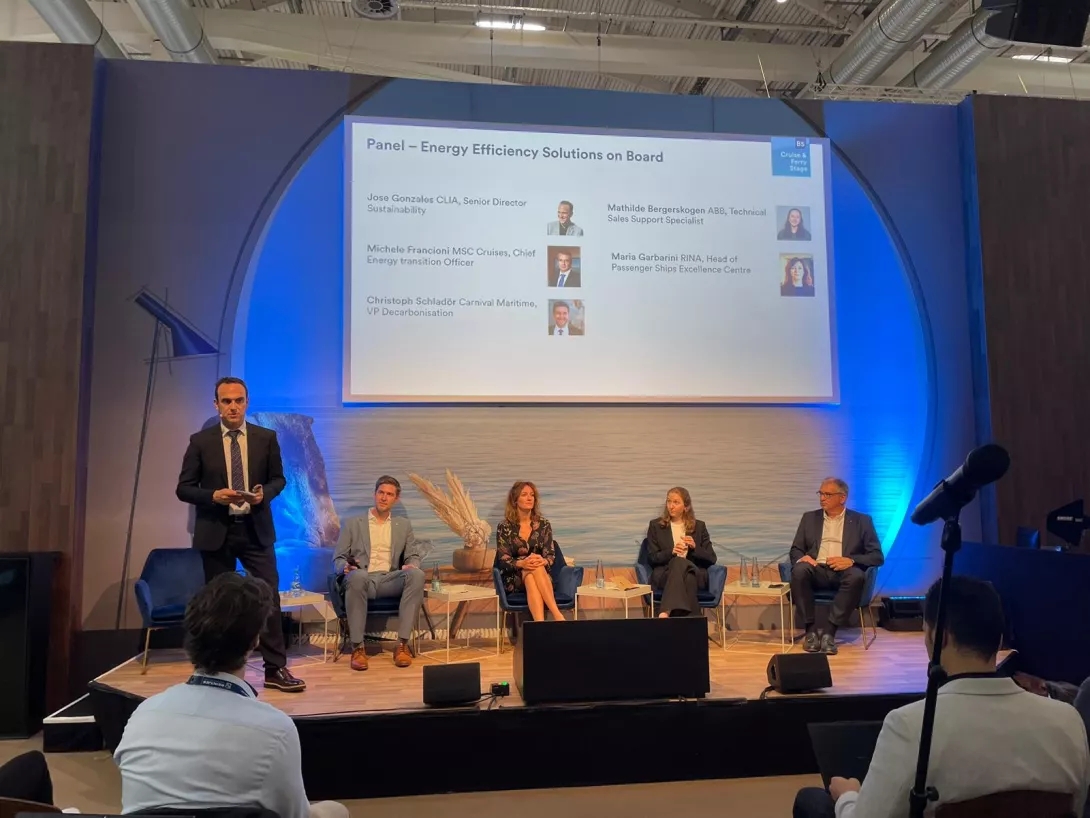
Jose Gonzalez, Senior Director Sustainability, Europe, CLIA, hosted a panel discussion on “Energy Efficiency on Board Cruise Ships”, which featured four high profile speakers: Christoph Schladör, VP Decarbonisation Carnival Maritime, Maria Garbarini Head of Passenger Ships Excellence Centre RINA SpA, Mathilde Bergerskogen Technical Sales Support Specialist ABB and Michele Francioni Chief Energy Transition Officer MSC Cruises.The new regulations and decarbonization goals put forward by the IMO are driving all marine stakeholders to find suitable solutions to decrease the environmental footprint of ships. One of the solutions already available is to keep the optimal energy efficiency standards aboard the ships. Energy efficiency encompasses different technologies and strategies, some of which are well known for the shipping industry. The discussion focused on technologies and strategies that can be applied nowadays to improve the performance and decrease emissions of the cruise industry. During the session a range of solutions and strategies was covered such as route optimization, installation of fuel-efficient propulsion systems and energy management systems, ensuring the audience gained a thorough understanding of each technology solution, and its benefits.It was evident that there is a wide range of options that can be applied, but two gained the attention of the panel discussion: VFDs (Variable Frequency Drives) and Biofouling. VFDS are a type of controller that drives and controls an electric motor, and by varying the frequency and voltage supply, it tunes the electric motor power delivery to the power demand; this way, it reduces the power consumption. Biofouling is the undesired accumulation of microorganisms, plants, algae, or small organisms on surfaces in contact with water; ships spend almost their entire operational life afloat favoring the creation of biological layers (biofilm) and macrofouling populations in different areas of the ship, not only in the hull but other niche areas like sea chests and bow thruster tunnels. The consequence is mainly reflected in additional dragging, loss of thermal performance, economic losses and environmental impact. The panelists recognized biofouling as an important issue and shared some ideas like the use of data to support energy efficiency strategies able to deal with the biofouling problem.But none of these technologies could be properly applied and managed if we do not keep a crew centred approach; and this is an aspect that the panellists also raised during the session. We acknowledge that the role of engineering and deck departments is vital, but the role of other crew members is also crucial to improve the energy efficiency of a cruise ship. Sustainable shipping requires a broad range of skills and competencies for seafarers to ensure safe and environmentally friendly ship operations – adopting the most up to date technologies and strategies will not boost the energy efficiency of the ship if the crew is out of the loop.This is an aspect also highlighted in the recent skills report launched by CLIA “An Ocean of Opportunities”, which can be viewed here: link.Moderator: Jose Gonzalez Senior Director Sustainability of CLIA in EuropeChristoph Schladör, VP Decarbonisation Carnival Maritime,Maria Garbarini Head of Passenger Ships Excellence Centre RINA SpA,Mathilde Bergerskogen Technical Sales Support Specialist ABBMichele Francioni Chief Energy Transition Officer MSC Cruises. 20 September, 2024 -
 Joint Industry GHG Reduction Policy Statement
Joint Industry GHG Reduction Policy Statement
The maritime industry, represented by the signatory industry organizations, is united in its pursuit of net-zero GHG emissions by 2050 consistent with the International Maritime Organization’s 2023 Strategy. Significant work remains and IMO Member States must build on the historic momentum that delivered the 2023 Strategy to develop, adopt, and implement appropriate mid-term GHG reduction measures.Acknowledging the complexities and impacts tied to an accelerated energy transition, and a variety of technical and economic proposals, we are dedicated to providing meaningful input to the development of workable regulatory measures while minimizing the risk of unintended consequences.Regardless of the final form the mid-term measures take, the following policy outcomes are necessary for the measures to effectively support our shared global ambitions.Accordingly, the measures should:On a pathway to net zero, achieve immediate and demonstrable net reductions in GHG emissions as a priority.Use a realistic, goal-based approach that is data-driven and fuel and technology neutral.Minimize administrative burdens while ensuring effective compliance enforcement.Incorporate flexible compliance mechanisms to allow investments where the most benefits can be realized.Take into account the GHG-intensity of fuels on a lifecycle/well-to-wake basis consistent with LCA Guidelines/IPPC principles/shoreside certifications.Allow the broader shipping industry access to collected funds for the direct development of technology, fuels, and measures to support decarbonization efforts.Send a clear signal and provide incentives to shipping companies, energy producers, marine fuel suppliers and technology manufacturers to help de-risk investment decisions, support early adopters and protect them from penalization, and enhance cost certainty to ship owners and charterers.Reduce or close the cost gap between zero and near-zero GHG fuels and traditional (fossil) fuels while minimizing disproportionate negative impacts on trade, recognizing that technological retrofits and the uptake of energy sources and less GHG-intense fuels available now are crucial to decarbonizing the existing fleet.Ensure there is no double counting of emissions or payment for emissions into more than one system, and regional or national programs are avoided or are sunset/harmonized with IMO requirements.Identify timelines for periodic assessments of fuels and technologies, with realistic phase-in/out periods and set timelines for review and consideration of future cost increases. 20 September, 2024