


























News Releases & Statements
Filters
Clear Filters
Requires Login
-
 CLIA guides tourism students through world of cruising and celebrates 2023 European Year of Skills
CLIA guides tourism students through world of cruising and celebrates 2023 European Year of Skills
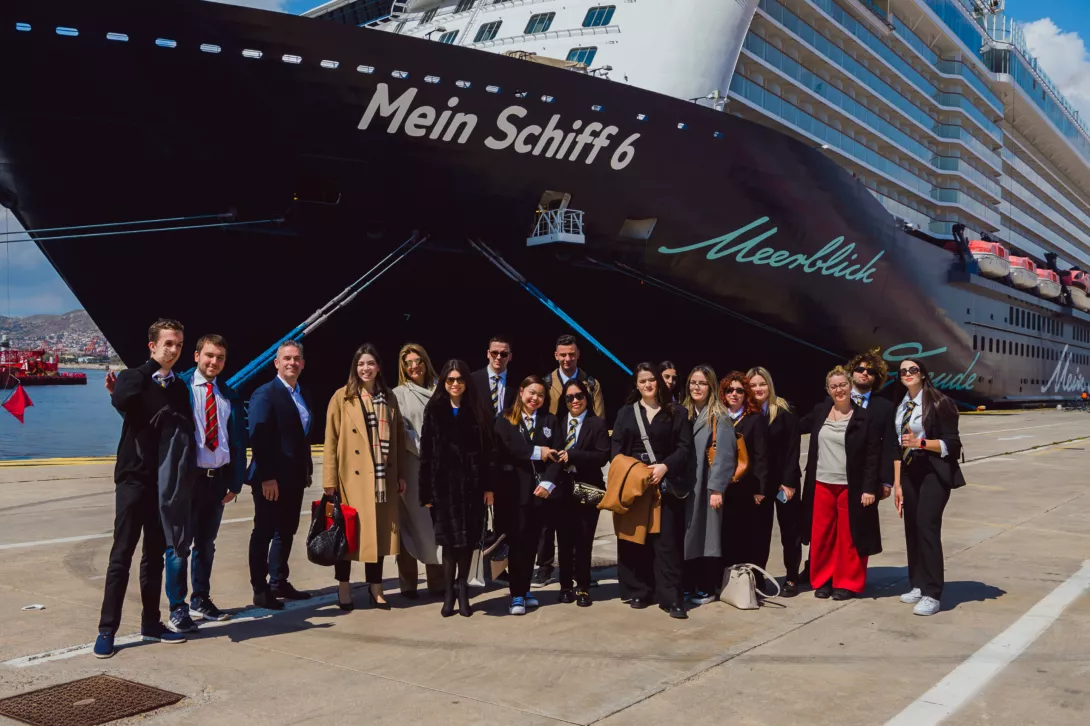
The opportunity to get onboard Mein Schiff 6 cruise ship of TUI Cruises at the Port of Piraeus in Greece, and to be informed about career opportunities in the cruise business and industry’s actions on sustainability, was given to Tourism Management students of BCA College, Greece, by CLIA in cooperation with TUI Cruises.The educational ship visit was part of CLIA’s priority to engage with students and young people who are interested in the dynamic cruise industry and raise awareness about its significant and growing impact on the economy and employment at global, European, and local level.Maria Deligianni, CLIA’s National Director for the Eastern Mediterranean, stated: “Seeing is believing. We want to offer to the students the opportunity to experience what cruising is about. 2023 is the European Year of Skills and we want to contribute to the development of skills in our industry. As a cruise industry we are sailing to a better future, and these young students are our future”, she added.CEO, TUI Cruises Wybcke Meier stated: “The cruise business offers a wide variety of career opportunities. They range from purely maritime jobs, to hotel operations including healthcare majors, cooks and entertainment specialists, and to ground handling, shore excursion providers and tour operators as well as the people in the office. We were delighted to co-host with CLIA this cruise ship visit onboard our Mein Schiff 6 and inform the students about the career paths offered by our industry”.As part of the same initiative, on April 4, Maria Deligianni visited BCA College and spoke to shipping students about the international cruise industry and how it sails sustainably.Seeing is believing. We want to offer to the students the opportunity to experience what cruising is about. 2023 is the European Year of Skills and we want to contribute to the development of skills in our industry. As a cruise industry we are sailing to a better future, and these young students are our futureMaria Deligianni, National Director, Eastern Mediterranean, CLIAThe cruise industry offers a high-quality work environment with competitive wages and benefits, as well as training for crew members to perform jobs skillfully and advance on a rewarding career path. CLIA member cruise lines employ a multinational workforce. Often more than 60 nationalities may be working together onboard ship at any one time.“It is a source of pride for the industry to employ so many people from different nationalities, cultures, and backgrounds. Multinational crews work together with respect in safe working environments to deliver the guest experience that is unique to a cruise holiday”, said Maria Deligianni.Cruise also provides the most advanced opportunities for women in maritime, as 94% of women seafarers across the world work in the cruise industry. At the same time, the industry is remarkable for its job satisfaction levels, reflected by the strong employee retention rates at upwards of 80%.According to latest CLIA data, the cruise industry generates annually more than 1,1 billion euros to the Greek economy and supports 15,100 jobs (2021 figures). 13 April, 2023 -
 Statement of CLIA and ECSA on the Renewable Energy Directive (RED) and its transport targets
Statement of CLIA and ECSA on the Renewable Energy Directive (RED) and its transport targets
Brussels, 28 March 2023 – Based on the initial political agreement achieved on 23 March on the FuelEU Maritime, the onus is put on maritime operators to use renewable fuels, without any corresponding obligation on the supply side.In advance of the final round of negotiations on the Renewable Energy Directive (RED) on 29 March, the European Community Shipowners’ Association (ECSA) and the Cruise Lines International Association (CLIA) therefore call upon the European Institutions to ensure that a binding target is adopted for the supply of renewable and scalable marine fuels. This is crucial to ensure that sufficient quantities of zero and low carbon marine fuels are made available on the market at an affordable price. According to policy scenarios in the framework of the 2030 Climate Target Plan (CTP), “renewable and low carbon fuels should represent between 6% and 9% of the international maritime transport fuel mix in 2030 and between 86% and 88% by 2050 to contribute to the EU economy wide GHG (greenhouse gas) emissions reduction targets”. However today, the supply of such fuels to the maritime sector barely exists in Europe.For more information contact:ECSA: Luisa Puccio – [email protected] +32 2 510 61 28CLIA: Martyn Griffiths – [email protected] +32 479 97 21 56*UPDATE* – 30 MarchAbout Cruise Lines International Association (CLIA)CLIA is the world’s largest cruise industry trade association, providing a unified voice for the industry as the leading authority of the global cruise community. On behalf of its members, affiliates and partners, the organization supports policies and practices that foster a secure, healthy, and sustainable cruise ship environment, promoting positive travel experiences for the more than 30 million passengers who have cruised annually. The CLIA community includes the world’s most prestigious ocean, river, and specialty cruise lines; a highly trained and certified travel agent community; and a widespread network of stakeholders, including ports & destinations, ship development, suppliers, and business services. For further information, please visit cruising.org or europe.cruising.org and for more details on our sustainability agenda visit cruiseinfohub.comECSA represents 20 national shipowners’ associations based in the EU and Norway. European shipowners control 39.5% of the global commercial fleet, contribute 149 billion euros per year to the EU GDP and provide 2 million Europeans with careers both on board and ashore. ECSA strives for a regulatory environment that fosters the international competitiveness of European shipping, to the benefit of the EU. 28 March, 2023 -
 Cruise Lines International Association and SEA Europe Joint Declaration calling for maritime technology to be included in the “Green Deal Industrial Plan.”
Cruise Lines International Association and SEA Europe Joint Declaration calling for maritime technology to be included in the “Green Deal Industrial Plan.”
Paris, 9 March 2023Cruise Lines International Association (CLIA) and SEA Europe welcome the European Commission’s Communication on a “Green Deal Industrial Plan for the Net-Zero Age” and its purpose of supporting industries, such as the maritime sector, that help to advance the European Green Deal aims through innovation.With the Green Deal and related Net Zero Industry Act, Europe has a unique opportunity not only to maintain its position as a global leader in complex shipbuilding, including cruise ship building and advanced maritime equipment manufacturing, but also to regain some market segments that are strategic for Europe’s autonomy.For this opportunity to be realized, CLIA and SEA Europe jointly call on the EU Institutions and European member state governments to recognize the importance of maintaining the maritime industry’s capabilities and excellence in Europe and to develop a sectoral maritime industrial strategy with support mechanisms to uphold one of Europe’s key industrial successes.CLIA and SEA Europe call on the EU Institutions and European member state governments to take immediate action in the following areas:Faster access to funding for sustainable ship building and maritime equipment manufacturing to preserve Europe’s world leading position currently held by this sector.Sustainable Finance criteria and parameters to be technology neutral, goal-based, and focused on Europe’s green innovation capability.The maritime sector must be included in the Temporary Crisis and Transition Framework (TCTF) and in EU Funds, in particular to receive benefit from the Innovation Fund for projects with EU added value.Expand support and incentives for retrofit programmes and deployment of renewable energy for the maritime sector.CLIA and SEA Europe support the proper inclusion of the cruise maritime sector and maritime technology industry in the Net-Zero Industry Act and full consideration of the sector in the European and national schemes for renewable energy deployment mechanisms.Specific targets for production of renewable marine fuels need to be adopted at EU and national level to accelerate investment and deployment. National renewable energy plans need to fully include the needs for infrastructure and deployment of renewable fuels at EU ports.CLIA and SEA Europe support the co-Programmed Partnership on Zero-Emission Waterborne Transport to accelerate research and development of innovative solutions for zero-emission waterborne transport, including zero-emission cruise ships.Ensure that the Pact for Skills has a dedicated programme for the maritime sector putting its workforce at the forefront of education so that digital, green, and technical skills stay in Europe.The European Commission’s recently launched Pact for Skills is a shared engagement model for skills development in Europe. It is an important step that brings together all relevant private and public stakeholders to support a fair and resilient recovery and delivers on the ambitions of the green and digital transitions, the EU Industrial Strategy as well as the provision of training and skills for these transitions.CLIA and SEA Europe call upon the EU to build a dedicated maritime programme to enable the industry to employ and support a highly trained and skilled workforce, both on land and at sea.Put the maritime sector at the heart of the EU digital strategy allowing the most advanced maritime sector to lead the way in energy and process efficiencies.CLIA and SEA Europe urge the EU institutions and Member States to support the maritime technology industry through a co-programmed partnership that will allow Europe to lead the way in technology development and to maintain its shipbuilding excellence for the benefit of future generationsAhead of publication of the Net Zero Act on 14 March 2023, CLIA and SEA Europe call on the European Institutions and Member State governments at this crucial moment to support the cruise ship building and advanced maritime equipment manufacturing industries allowing them to accelerate and meet their ambitious environmental objectives.The Net-Zero Industry Act is an important step forward for the Green transition of our economy, but the EU has yet to recognize the strategic role of the maritime technology sector in Europe’s industrial strategy. The EU must ensure that the right regulatory framework is in place to maintain its strategic strength in complex shipbuilding and maritime technologies. That is why we are calling on the EU to ensure that include the maritime industry in the Net Zero Act.Marie-Caroline Laurent, CLIA Director General 16 March, 2023 -
 CLIA European Summit, Paris 2023
CLIA European Summit, Paris 2023
How Europe can lead the way in technology development and maritime excellenceParis, 9 March 2023CLIA Global Chairman, Pierfrancesco Vago opened the European Summit on Thursday morning, underlining the maritime technology industry’s central role in European clean tech and industrial innovation towards net zero.Mesdames et Messieurs,Bienvenus au Sommet européen de CLIA.C’est pour moi un grand plaisir et privilège de vous accueillir ici à Paris.La France a une place spéciale pour notre industrie.Le pays mène le développement de nos activités, que ce soit en étant leader dans la construction navale grâce à son savoir-faire industriel exceptionnel ou grâce à son rôle d’innovateur dans le secteur.La France est aussi pionnière en matière de transition énergétique.Nous avons récemment signé la Charte Croisière Durable.Cette Charte est inédite au niveau mondial, non seulement par le champ de l’accord couvert, mais aussi par le caractère volontaire de ces mesures que l’ensemble des membres de la CLIA a décidé de porter.Tous ces éléments rendent notre présence aujourd’hui à Paris fondamentale.And now, let me switch to English for our international guests.Ladies and Gentlemen,It is a pleasure and a privilege to welcome you to Paris in such a prestigious venue.To kick off the day, I should like to share some thoughts to set the scene for what I hope will be a fruitful day of discussions.European shipbuilding is truly at the heart of clean tech and industrial innovation.Let me tell you why.93% of the world’s ocean-going cruise ships are built in Europe.As ship construction moved East in the past decades, European shipyards were able to retain this crucial segment of shipbuilding and economic impact that it generates.Today, we are making significant investments to introduce innovations that will deliver a zero-carbon future.We are equipping our ships with the latest technologies including fuel cells, batteries, and new propulsion solutions.While also supporting the development of sustainable marine fuels.By 2028, there will be 38 latest-generation cruise ships powered by LNG amongst the fleets belonging to CLIA members.While still fossil, this transitional fuel brings immediate environmental benefits.LNG engines are also helping us test, deploy and scale non-fossil based synthetic and bio forms of LNG that will help us advance towards a net zero-carbon future.Investments are also being made to reduce emissions while ships are in port to benefit local communities.85% of cruise ships coming online between now and 2028 will be able to connect to shore power.The drive to futureproof our sector brings social and economic benefits across Europe.Despite the challenges of the pandemic, the cruise industry even in 2021 added over 40 billion euros to Europe’s economy, supporting more than three hundred thousand jobs across the Continent.Despite the challenges of the pandemic, the cruise industry even in 2021 added over 40 billion euros to Europe’s economy, supporting more than three hundred thousand jobs across the Continent.Pierfrancesco Vago, CLIA Global ChairmanThis was during a period when passenger volumes were drastically reduced.It was the strong relationship between the cruise industry and European shipyards that allowed us to continue generating economic value during this challenging period.But there is more to come.62 more cruise ships are on order for the next five years, representing a 40 billion euros direct investment in Europe.Cruise ship building represents around 80% of the order book of shipyards in Europe.This is one of the backbones of Europe’s industry, and is important that this is fully appreciated.Over and above the emissions reductions there is a huge amount that we already do onboard our vessels that people are not aware of:Advanced wastewater management systems that ensure any water returned to the ocean is bacteria free and PH neutralWaste treatment plants to recycle everything from aluminium to food wasteSpecial paint on our hulls that does not release any acid into the waterLow frequency propellers designed to minimise disturbance to marine mammalsNOx and SOx emissions virtually eliminated by using environmental technological solutions, with further improvements thanks to LNGIn addition to environmental innovation, we bring the same approach to our ashore operations. Not only when it comes to the mobility of our passengers but also specifically how we handle their flow into the cities that our ships visit. To ensure minimal impact to the communities that live there while preserving opportunities for positive economic impact.Yet, we are still seeing misrepresentation of our industry and this is why it is important for us to be here today to have an opportunity to explain how we operate.VENICE: only one in 33 visitors to the city were from cruise ships and when there were no cruise ships visiting they still had 35 million visitorsAnd it is this approach, both in terms of environmental technology and management of our operations ashore, that actually makes cruising a far more sustainable form of tourism than many other forms of holiday.Shipbuilding is – as I mentioned earlier – one of the key industrial sectors that positions Europe as a global leader.As a hub for shipbuilding and advanced maritime equipment manufacturing, our industry benefits Europe’s maritime resilience and strategic maritime autonomy.Today is therefore an important moment as Europe’s shipping associations come together to stress the urgency of supporting the continued growth of flagship industries like shipbuilding and defend their strategic know how – which in this case, goes well beyond cruise shipbuilding.The EU’s ambition is for Europe to be the home of industrial innovation on the road to net zero.The European Commission set out a vision to become the first carbon neutral continent with its Green Deal.It then developed the regulatory framework to support this with the Fit for 55 Package.But regulatory requirements alone will not suffice to achieve this.Industry overall is important to the economy of Europe. This is why the entire industrial complex here in France and across the rest of Europe has a critical role to play in our response to the climate challenge.The Commission recognised this last month with its Green Deal Industrial Plan, which aims to enhance Europe’s industrial competitiveness and manufacturing capacity in the transition to climate neutrality.Our industry welcomes the Commission’s steps to boost investment and financing of cleantech production.And the prospect for a regulatory environment that allows for fast scalability and conducive conditions for sectors that are crucial to reaching net zero.But we must acknowledge that the EU is no longer alone in seeking to unlock a carbon neutral future.Some of Europe’s biggest partners are seizing net-zero industrial opportunities and stepping up the game with highly ambitious industrial policy proposals.In the US, the Inflation Reduction Act will notably mobilize 370 billion dollars to accelerate private investment in clean energy.Japan and other economies are following similar paths.The cruise industry welcomes this renewed global focus in the acceleration of clean technologies.Also, here in Europe, we must ensure that the right framework is in place for private companies to drive this transition.The Commission’s proposal does provide a response to these initiatives.It brings opportunities for Europe to maintain its position as a global leader in complex shipbuilding.And here I want to pause and reiterate that cruising, which only represents 3% of CO2 emissions from the maritime sector, is spearheading innovation for the entire maritime industry and well beyond it, benefiting civil societyAnd we need to develop a maritime industrial strategy that upholds this industrial success.But make no mistake: Europe still risks getting caught on the wrong foot.Let me illustrate this with an example from my own cruise line, MSC Cruises.When conceiving MSC World Europa, we set out to test how solid oxide fuel cell technology could function on a cruise ship.Despite numerous attempts, we were not successful in finding a partner anywhere in Europe for this technology.And were left with no option but to team up with a company based in California.Based on all the above, I want to highlight the importance of taxonomy to ensure innovation can continue to receive the financing it needs.It is critical that sustainable finance criteria recognise our industry’s role in this process.Without this, access to funding for sustainable shipbuilding cannot be ensured.In the current climate, it is becoming more challenging to secure funding from financial institutions to build the next generation ships that allow us to test and roll out continuously improving environmental technologies for our industry..Most important in all this is the role of credit export agencies, they need to be able to do their job.Let me remind you all we have already lost the bulk of our shipbuilding industry to Asia, and Europe now risks losing complex shipbuilding too.Today, as countries across the world set out to build their cleantech capabilities, the EU must ensure that the right conditions are in place for these industries to flourish here.The EU Green Deal Industrial Plan risks being too little, too late.And yet, the Commission’s proposal recognises that industry has the ingenuity and the skills base to solve the climate challenge.This is a very important first step in the right direction, but the EU is still not receptive to hearing our voice and understanding the unique contributions the cruise industry makes.I am calling on everyone here to take onboard my message, this is a wake-up call we need to be heard across all the European institutions.And today I am glad that later we will announce that CLIA and SEA Europe will be making a joint a declaration calling on EU Institutions to recognize the importance of maintaining this unique know how in the Continent.We all agree that Fuel cells, LNG and biofuels are what we need for the current transition phase.But we need to move NOW to secure a supply of renewable fuels at the scale required not just for cruise but for the entire maritime sector.We want specific targets for production of renewable marine fuels to be adopted at EU and national level to accelerate investment and deployment.And national renewable energy plans to fully include the needs for infrastructure and deployment of renewable fuels at EU ports.By doing this we will make sure that Europe remains at the centre of cleantech development for decades to come.We – the cruise industry – came up with the protocol that unlocked travel during the pandemic and now we stand ready to help European institutions solve climate change!Je vous remercie de votre attention, et je vous souhaite un excellent Sommet.END 13 March, 2023 -
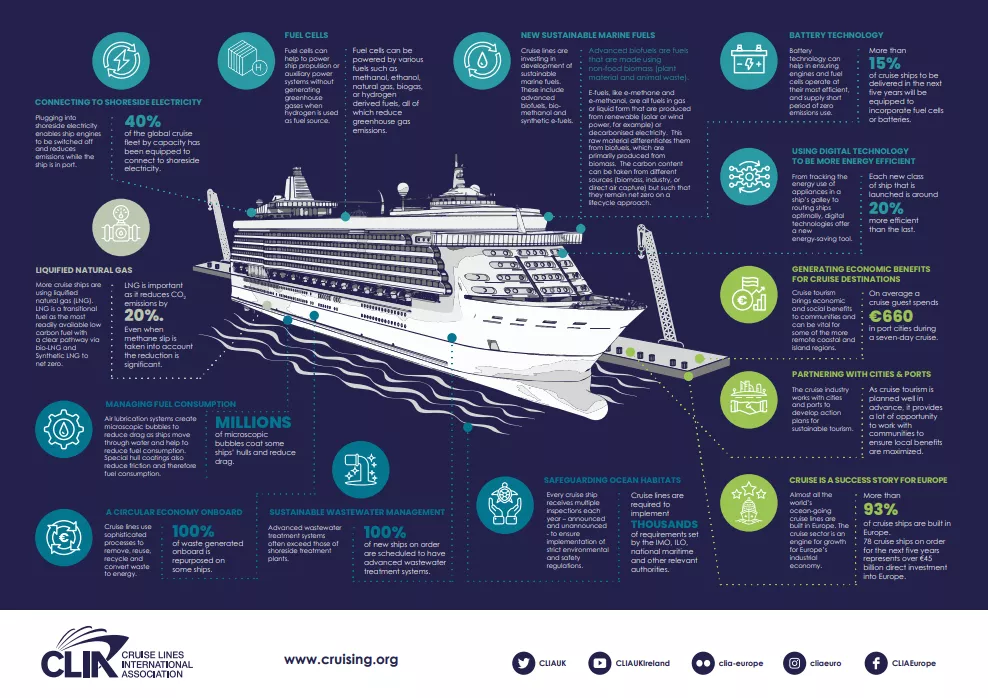 CLIA launches sustainability toolkit showcasing the industry’s environmental innovation practices
CLIA launches sustainability toolkit showcasing the industry’s environmental innovation practices
Paris, 10 March 2023The new online source of information for stakeholder communities is accessible in six languagesCruise Lines International Association (CLIA) has produced a new, online interactive resource showing how the cruise industry is advancing its sustainability agenda.The new toolkit is accessible to all and contains information in multiple languages that can be downloaded and shared, including reports, statistics, maps, posters, and infographics.The first edition of the toolkit, which was launched at CLIA’s European Summit, is available in six languages: English, French, German, Italian, Norwegian and Spanish. More geographies and languages will be covered in a second edition to be issued later in the year.The cruise industry supports the livelihoods of thousands of people and their families. As well as featuring the various environmental innovations being introduced onboard cruise ships, the toolkit is a way to share stories and to raise awareness with local communities and the wider public about how cruising is an integral part of societies and economies. The site includes good practice examples of cooperation between cruise lines, business organizations, ports, and local authorities.The toolkit can be accessed here: https://bit.ly/cliahub 10 March, 2023 -
 CLIA and SEA Europe announce Joint Declaration calling for the EU to include cruise ship building and maritime technology in the Net Zero Industry Act
CLIA and SEA Europe announce Joint Declaration calling for the EU to include cruise ship building and maritime technology in the Net Zero Industry Act
Paris, 9 March 2023Joint Declaration shows how Europe can lead the way in technology development and maritime excellence.Cruise lines, shipyards and marine equipment manufacturers have issued a Joint Declaration calling on the European Commission and European governments to include cruise ship building and the maritime technology sector in the forthcoming Net Zero Industry Act.The Joint Declaration, announced at CLIA’s 2023 European Summit, calls for:faster access to funding for sustainable shipbuilding and maritime equipment manufacturing to support Europe’s world-leading position in this sector.expansion of support and incentives for retrofit programmes and deployment of renewable energy for maritime.a dedicated maritime programme as part of the EU Pact for Skills so that digital, green, and technical skills stay in Europe.maritime to be placed at the heart of the EU digital strategy to enable knowledge-share of the sector’s advanced digitalization practices.Launching the Joint Declaration, CLIA Chairman, Mr Pierfrancesco Vago said: “Cruise lines don’t just provide one of the most popular holiday options for consumers today, but they are also already partnering with shipyards and maritime technology providers to achieve net zero cruising by 2050. Pilot projects are underway to test new fuels and propulsion solutions such as batteries, fuel cell technology, advanced biofuels, and synthetic fuels. It is now time for European policy makers and governments to partner with the maritime technology sector. Europe has an opportunity to lead the way in technology development and maritime excellence for the benefit of future generations.”It is now time for European policy makers and governments to partner with the maritime technology sector. Europe has an opportunity to lead the way in technology development and maritime excellence for the benefit of future generations.Mr Pierfrancesco Vago, CLIA Chairman“The building of cruise ships and the integration of advanced equipment and technology onboard such ships is very complex and illustrates the maritime industrial capabilities and know-how of Europe’s shipyards and maritime equipment industry. These capabilities and know-how will not only be crucial to achieve the European Green Deal objectives but also to enable Europe to meet other political objectives such as in terms of defence, blue economy, or energy transition, as well as to safeguard Europe’s maritime strategic autonomy” underlined René Berkvens, SEA Europe’s Chairman.With its Fit for 55 package and now the Green Deal Industrial Plan, Europe is on a clear and ambitious path to combat climate change and become a carbon neutral continent. Sea Europe and CLIA members started charting a course in this direction several years ago, producing more energy-efficient vessels, using new types of fuels, and equipping vessels with shoreside electricity connection. As the industry looks to the future, CLIA and Sea Europe remain fully committed to the EU long-term objectives.Powering Europe’s green industrial revolutionThe cruise industry generates significant economic impact to European economies. More than 93% of the world’s ocean-going cruise lines are built in European shipyards, and cruise ship building represents around 80% of the order book of shipyards. With 62 cruise ships on order for the next five years, this represents more than €40 billion direct investment in Europe.According to new CLIA data, released during the Summit, the cruise sector generated €41bn economic impact in Europe during 2021 despite drastically reduced passenger volumes due to pandemic restrictions. The sector also supported 315,000 jobs in Europe during this challenging time. The strength of the European shipbuilding sector and its ties with the global cruise industry was key to maintaining robust levels of social and economic impact in Europe.EndsClick here to read the full CLIA & SEA Europe Joint Declaration.Contacts: CLIA – Philomene Bouchon at [email protected] or Julie Green at [email protected] the Cruise Lines International Association (CLIA)CLIA is the world’s largest cruise industry trade association, providing a unified voice for the industry as the leading authority of the global cruise community. On behalf of its members, affiliates and partners, the organization supports policies and practices that foster a secure, healthy, and sustainable cruise ship environment, promoting positive travel experiences for the more than 30 million passengers who have cruised annually. The CLIA community includes the world’s most prestigious ocean, river, and specialty cruise lines; a highly trained and certified travel agent community; and a widespread network of stakeholders, including ports & destinations, ship development, suppliers, and business services. For further information, please visit cruising.org or europe.cruising.orgAbout SEA EuropeSEA Europe represents the European shipbuilding industry in 15 nations, encompassing the production, maintenance, repair, retrofit and conversion of all types of ships and floating structures, commercial as well as naval, including the full supply chain with the various producers of maritime systems, equipment material, and services. For further information please visitwww.seaeurope.euor contact: Christophe Tytgat, Secretary General [email protected] 09 March, 2023 -
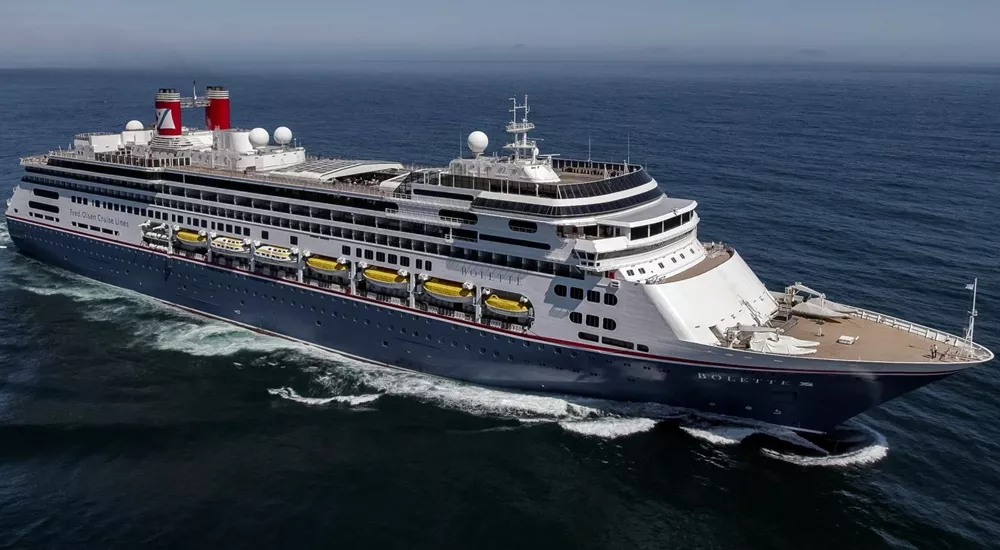 Fred. Olsen Cruise Lines’ welcomes CLIA and Government officials to multi-million pound refurbishment of flagship Bolette at A&P Falmouth shipyard
Fred. Olsen Cruise Lines’ welcomes CLIA and Government officials to multi-million pound refurbishment of flagship Bolette at A&P Falmouth shipyard
Friday, 3rd March 2023Fred. Olsen Cruise Lines’ and A&P Falmouth today welcomed officials from the UK Government and industry body Cruise Lines International Association (CLIA) for a tour of its multi-million pound refurbishment of flagship Bolette.Among those who visited were Cherilyn Mackrory, MP for Truro and Falmouth, and a senior policy advisor for Department for Transport, alongside Andy Harmer OBE, Managing Director of CLIA UK & Ireland, and Julie Green, Vice President of Strategic Communications at CLIA, with the purpose of the visit to showcase the working shipyard and demonstrate the value of cruise to the UK economy.The visitors were were given a tour of the Bolette to showcase the projects that are ongoing at the shipyard both on and off the ship.Stuart Ferguson, Head of Quality and Resource at Fred. Olsen Cruise Lines, said:“Dry docks form an important part of any cruise line operation, by giving us the chance to maintain, inspect and refurbish parts of the ship that we simply can’t do while we are sailing.“Each of our ships will undergo routine time in dry dock around every two years, and we are really proud to be completing these projects here in shipyards in the UK. It means the money we spend is invested in and supports communities locally, as well as vital supply chains in the surrounding areas.“That aside, it also provides an opportunity for us to provide valuable knowledge and experience to the many apprentices who work with the team at A&P, and give them the opportunity to work on a passenger ship.”Cherilyn Mackrory, MP for Truro and Falmouth, said:“It was a pleasure to visit A&P Falmouth to see the work being carried out on a cruise ship in dry dock. Cruise ship refurbishments help to refine the skill sets and shipbuilding capabilities of our shipyards, and result in significant benefits for the local economy. The UK’s National Shipbuilding strategy will only be a success if every part of the maritime industry contributes.“I am therefore delighted to see the cruise industry using British shipyards for refurbishments, with this being the second time that Fred. Olsen Cruise Lines has made use of the A&P Falmouth facilities.“Falmouth is a leading cruise destination, bringing significant economic value to the area, without adding any pressure to current resources and I look forward to continuing Falmouth’s strong relationship with the cruise industry.”Andy Harmer OBE, Managing Director for CLIA UK and Ireland, said:“The cruise industry generates significant economic value across the UK.The work being done by A&P Falmouth for Fred. Olsen Cruise Lines shows that this value is generated not only by shipbuilding but also because of ongoing investment, whether it relates to refurbishments, retrofits, or upgrades.“Cruise lines are always looking beyond the horizon and future-proofing ships. As well as the economic impact, it is fantastic to see how UK shipyards are benefiting from the opportunity to develop workforce skills.”Mike Spicer, Managing Director at A&P Falmouth, said:“A&P was delighted to welcome Cherilyn Mackrory MP, the Department for Transport and Andy Harmer to our facilitytoday.“A&P’s location in the south west makes it an ideal facility for cruise ships operating in this area. Today’s visit provided a fantastic opportunity to showcase our capabilities.“Contracts such as these make a significant economic contribution to the prosperity of the south west and helps to support our workforce and apprenticeship programme. We look forward to continuing our partnership with Fred. Olsen Cruise Lines over the months and years to come.”This is the second time that Fred. Olsen has used A&P Falmouth for refurbishment projects, with fellow ship Balmoral having undergone work at the shipyard in May 2022. Bolette’s programme further demonstrates Fred. Olsen’s commitment to investing in UK shipyards and economies, and follows on from an extensive refurbishment programme carried out with sister ship Borealis at Cammell Laird shipyard in Birkenhead in November 2022. Bolette will leave A&P Falmouth on Tuesday, 7th March and will set sail for Newcastle, where she will be based for the spring and summer season.Ship Bolette, from Fred. Olsen Cruise Lines, refurbished by A&P Falmouth shipyard.For further information on Fred. Olsen Cruise Lines, visit https://www.fredolsencruises.com/.For further information on A&P Falmouth, visit https://www.ap-group.co.uk/facilities/ap-falmouthFor further information on CLIA UK, visit https://cruising.org/en-gb 06 March, 2023 -
 Cruise Lines International Association (CLIA) announces new STARBoard and Trade Relations Committee leadership
Cruise Lines International Association (CLIA) announces new STARBoard and Trade Relations Committee leadership
Leaders will each serve two-year terms integral to CLIA’s North America Travel Trade members(WASHINGTON, DC, 3 Feb. 2023) Cruise Lines International Association, the world's largest cruise industry trade association, providing a unified voice and leading authority of the global cruise community, today announced the appointment of four leaders to helm its Strategic Trade Advisory and Review Board (STARBoard) and Trade Relations Committee (TRC) in North America.Anita Pagliasso, Vice President of Industry Relations with KHM Travel Group, and Skip Fortier, Vice President of Network Expansion with Avoya Travel, will serve as STARBoard co-chairs. Dondra Ritzenthaler, ECC, Senior Vice President of Sales, Trade Support & Service, The Americas with Celebrity Cruises, will serve as TRC chair, and John Diorio, Vice President, North American Sales with Virgin Voyages, will serve as TRC vice-chair. The two-year terms for the four leaders will run through December 31, 2024.The STARBoard and TRC are steering committees. The STARBoard is comprised of CLIA Premier Member (agency and consortia) leaders and leaders from selected CLIA Travel Agency Members. The TRC is comprised of trade sales and marketing leaders representing CLIA’s Global Cruise Line Members and River Cruise Marketing Affiliates. Both groups receive regular updates from CLIA on its advocacy work, industry affairs, and North America Travel Trade Membership and Professional Development matters. The STARBoard and TRC provide CLIA leadership with counsel and support of initiatives; and create task forces as deemed appropriate.“CLIA is delighted to have these dynamic and talented leaders helming our STARBoard and TRC,” said Charles Sylvia, ECC, Vice President, Industry and Trade Relations with CLIA. “Anita, Skip, Dondra, and John are unwavering advocates of the travel trade and staunch supporters of a strong and successful travel agency distribution channel for cruise.”About the leaders of the STARBoard and Trade Relations Committee:STARBoard Co-ChairsAnita Pagliasso opened her home-based travel business, Ticket to Travel, in 1992, and soon after agents were looking to her for mentoring and guidance. Anita has become a renowned industry speaker, home-based travel agent advocate, author, and mentor to thousands. In addition to her role as KHM Travel Group’s Vice President of Industry Relations, she is the President of PATH, an Executive Board Member for The Travel Institute, NorCal ASTA President, and the Vice President for the California Coalition of Travel Organizations.Skip Fortier has been in the travel industry for over three decades, starting with United Airlines. In 2008 Skip started his own agency affiliating with Avoya Travel and for four years was recognized as the Best of the Best in sales. In 2022 he was named one of the Top 25 Travel Agents in the US by Travel Agency Magazine. At the end of 2011 Skip sold his agency and was brought in by Avoya to run their agency expansion team. In addition to his responsibilities at Avoya Travel, Skip is a member of the ASTA Corporate Advisory Council, and on the Board of Directors for PATH.Trade Relations Committee ChairsAs SVP of Sales, Trade Support and Service with Celebrity Cruises, Dondra Ritzenthaler, ECC, leads the sales organization for the Americas including the US, Canada, Mexico, and Latin America. Widely credited for raising awareness of the importance of travel advisors, Ritzenthaler has led the creation of a number of programs designed to help travel advisors build their business, including “The Celebrity Commitment.” And, under her leadership, Celebrity has been awarded “Best Premium Cruise Line,” by leading industry trade publication, Travel Weekly, for 14 consecutive years.An integral part of the dedicated Virgin Voyages crew who delivers on being Brilliant To Do Business With for their First Mates (Travel Advisors) around the world, John Diorio leverages his 30 years of experience in sales, leadership, and industry relations to lead sales and support in North America. Prior to setting sail The Virgin Way, over four years ago, John was a member of The Mark Travel Corporation’s sales leadership team and held various senior leadership roles at Expedia Group in addition to providing strategic consulting in the travel realm. 03 February, 2023 -
 Cruise Lines International Association and SEA Europe issue joint call for maritime technology to be included in the “Green Deal Industrial Plan”
Cruise Lines International Association and SEA Europe issue joint call for maritime technology to be included in the “Green Deal Industrial Plan”
The cruise maritime sector points to the maritime technology industry’s central role in European clean tech and industrial innovation towards net zero.Brussels, 1 February 2022 – Cruise Lines International Association and SEA Europe have called for shipbuilding and maritime equipment manufacturing, known as the maritime technology industry, to be recognised as an integral part of the “Green Deal Industrial Plan”, which was announced by the European Commission today.The EU has adopted with the Fit for 55 an ambitious plan to reduce emissions from the waterborne sector. Achieving this plan will rely on significant innovation and investment in new vessels and clean technologies. Europe has a unique opportunity to maintain its position as a global leader in complex shipbuilding, including cruise ship building, and in advanced maritime equipment manufacturing as well as to regain some other market segments. Cruise ship building represents around 80% of the order book of shipyards in Europe. With over 78 cruise ships on order for the next five years, this represents €45 billion direct investment in Europe.Marie-Caroline Laurent, Director General, Europe, CLIA said:“The shipbuilding industry is at the heart of clean-tech and industrial innovation in Europe and, as such, needs to be recognised and included in the Commission’s strategy. Today, more than 93% of the world’s ocean-going cruise ships are built in Europe. Cruise lines are making significant investments now in partnership with European shipyards and equipment manufacturers equipping ships with the latest technologies including fuel cells, batteries, and new propulsion solutions, driving the innovation that will deliver net zero emission shipping.”Christophe Tytgat, Secretary General, SEA Europe said:“Europe’s maritime technology industry is a strategic key enabler of the EU’s political ambitions in terms of defence, European Green Deal, EU Digital Agenda, Blue Economy. Including this industry in the Green Deal Industrial Plan for clean tech and industrial innovation on the road to net zero will have many benefits, not only for the industry’s global competitiveness but also for Europe’s maritime resilience and strategic maritime autonomy”.The Green Deal Industrial Plan will cover four key pillars: regulatory environment, financing, skills, and trade. The cruise and maritime technology industry is calling on the European Commission to take the following steps:New propulsion solutions and the use of alternative fuels are amongst the biggest opportunity to decarbonise shipping. CLIA and SEA Europe are therefore calling for the maritime sector to be included in the Temporary Crisis and Transition Framework (TCTF) and in EU Fundings.CLIA and SEA Europe support the proper inclusion of the cruise maritime sector and maritime technology industry, in the Net-Zero Industry Act and the full consideration of the sector in the European and national schemes for renewable energy deployment mechanisms.Contact: Julie Green, CLIA: [email protected]; + 32 472570169About Cruise Lines International Association (CLIA)CLIA is the world’s largest cruise industry trade association, providing a unified voice and leading authority of the global cruise community. On behalf of the industry, together with its members and partners, the organisation supports policies and practices that foster a secure, healthy and sustainable cruise ship environment, as well as promote positive travel experiences for the more than 30 million passengers who cruise annually. The CLIA community includes the world’s most prestigious ocean, river and specialty cruise lines; a highly trained and certified travel agent community; and cruise line suppliers and partners, including ports and destinations, ship development, suppliers and business services. The organisation’s global headquarters are in Washington, DC, with regional offices located in North and South America, Europe, Asia and Australasia.SEA EuropeSEA Europe represents the European shipbuilding industry in 15 nations, encompassing the production, maintenance, repair, retrofit and conversion of all types of ships and floating structures, commercial as well as naval, including the full supply chain with the various producers of maritime systems, equipment material, and services.For further information please visit www.seaeurope.eu or contact: Christophe Tytgat, Secretary General [email protected] 01 February, 2023 -
 How Tourism Can Forge a Path to Net Zero
How Tourism Can Forge a Path to Net Zero
During COP27 held in Egypt last month, the United Nations World Tourism Organisation (UNWTO) urged the tourism industry to take urgent action to reach net zero, and discussed the pathways to achieve measurement and decarbonisation, as well as regeneration and finance.According to the latest “United in Science” Report, CO2 emissions are on the rise with atmospheric greenhouse gas (GHG) concentrations reaching record levels driving rapid climate change which in turn threatens our way of life on earth. There is an urgent need to for every individual or corporate to take action.Nobody can afford to be complacent as climate change intensifies and takes a toll on socio-economic development.Common challenges across our industry to reach our net zero targets range from accurate emission measurement and reporting, to a fragmented regulatory landscape, insufficient budgets or hard to replace infrastructure.There are subsectors where costs for transformation can be prohibitive, resulting in a long-transition to net zero. Such is the case for asset-heavy sectors in the travel and tourism industry: aviation, cruise or hotels where it will take time to implement infrastructure improvements, or switch to hydrogen or electric powered solutions to reduce absolute carbon emissions.As global leaders shift their attention to climate finance, COP27 saw US$4 to $6 trillion a year committed for investments in technology and infrastructure. Therein lies an opportunity to simultaneously tackle climate change and drive digitalisation in Southeast Asia where 4 out of 11 unicorns come from Travel & Hospitality.Concurrently, consumer sentiments are changing – often ahead of regulatory changes. Travellers are becoming more conscious of their environmental footprint and are looking for more sustainable travel options.These factors together means industries should take the lead, and act ahead of government policy.To play our part and drive the future resilience of tourism, our fund invests in high growth startups, from Seed to Series A. We take a sector-strategic expertise approach and employ institutional financial discipline to seek out new projects for economic diversification and market-creation.We hope to galvanise more organisations within our industry to invest in our future collectively, and place future considerations about how business can reduce greenhouse gas emissions and achieve carbon neutrality with investments in long-term and systemic change.For example, hoteliers can invest in technology and transform their properties to be less reliant on fossil fuels. Contributing to regenerative projects that protect forests and coastal ecosystems can also help companies reduce their carbon footprint.Velocity Ventures has recently invested in New Zealand enviro-tech company CarbonClick that offers corporates and consumers options to off-set the carbon foot print associated with their travel. They offer high-quality carbon offset programmes by showing where and how their contributions have been used with a “track and trace” feature providing full details of the offset.While voluntary offsets provides a proactive solution for corporates and consumers to stay ahead of slower moving industry schemes or government regulation, it is also important for tourism businesses to shift investment and financing towards decarbonising our planet’s future.Entrepreneurs will play a key role in achieving our industry’s transformation to Net-Zero, bringing to market the technologies that are needed to drive this change. Velocity Ventures is committed to supporting their ambitions, taking pro-active steps to invest and help grow their companies and the technologies that will allow us to achieve a low carbon world.To find out more about what other tourism organisations are doing to reach their Net-Zero goals, download our report here. 01 February, 2023