























North America
The North American cruise market is the largest and most influential in the global cruise industry, accounting for a significant share of passenger volume, cruise line headquarters, and key departure ports. The region includes the United States, Canada, and Mexico, with the U.S. being the dominant player in cruise travel.

Passengers
20.5 Million
In 2024, there were 20.5M total passengers sailing from North America

Global Market
57%
North America accounts for nearly 60% of global cruise passengers, with millions of travelers embarking each year

Total Impact
$65 Billion
the sum of the direct, indirect, and induced impacts from cruise activity on the US economy in 2023
GDP
$36 Billion
$36 Billion in gross domestic product (GDP) the US economy in 2023

North America Regions
Hawaii
Canada East Coast & New England
Economic Impact
The cruise industry is a major economic driver in North America, contributing $36 billion to the U.S. economy in 2023, making it the top-ranked cruise market globally. It supports over 290,000 jobs across the U.S., fueling employment in tourism, hospitality, and maritime sectors. In Canada, the industry contributed CA$5.2 billion to the economy, ranking 7th globally, while supporting over 23,700 jobs. Alaska alone saw a $2.1 billion economic impact, creating more than 10,500 jobs, showcasing the cruise sector’s vital role in regional economies across North America.
GDP
$36 Billion
$36 Billion in gross domestic product (GDP) the US economy in 2023
Jobs
23,700
The cruise industry supports more than 23,700 jobs in Canada
Total Impact
$2.1 Billion
Alaska’s cruise industry generated a total output of $2.1 billion
Key Departure Ports
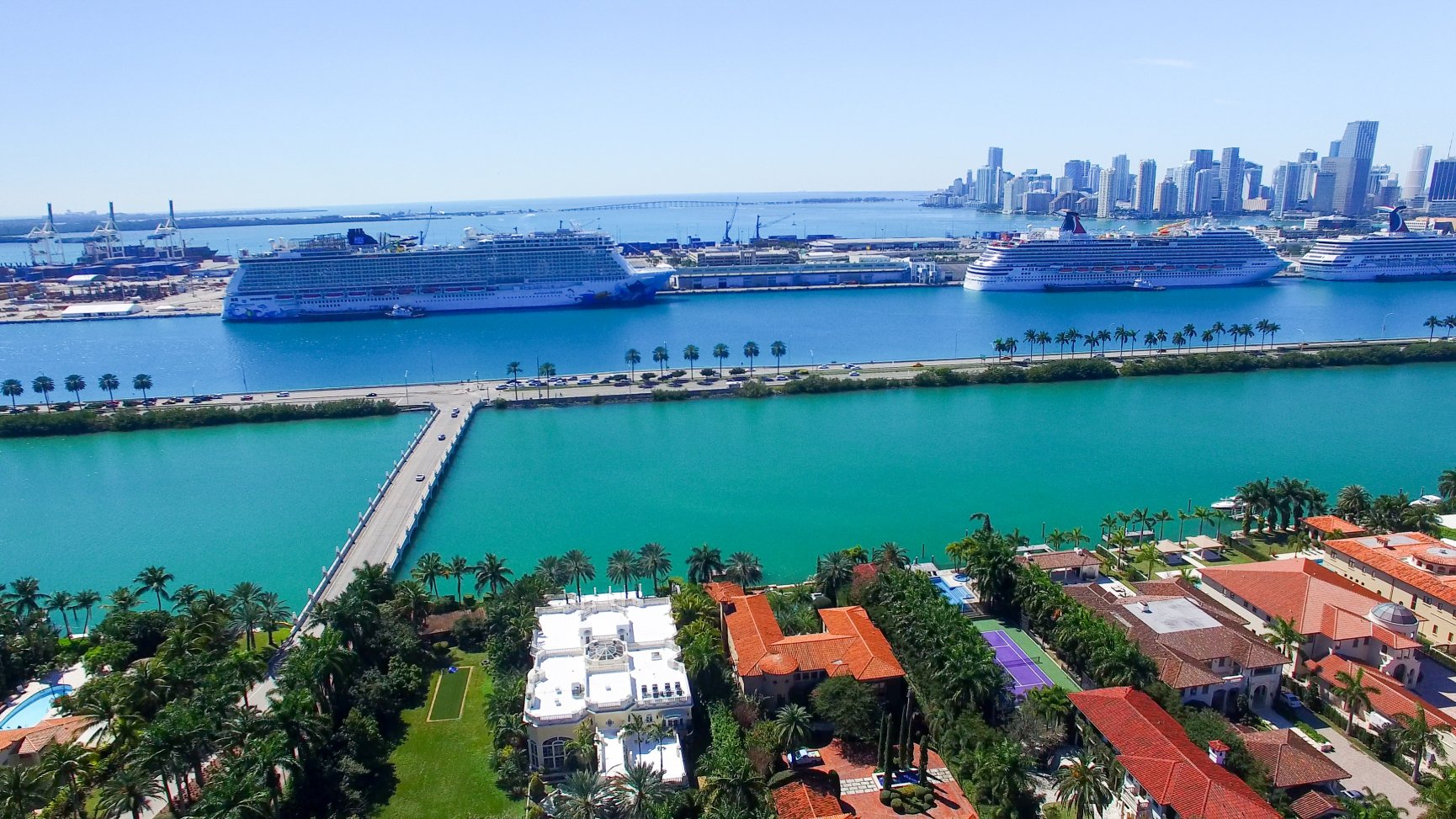
- Florida (Largest Cruise Hub) – Miami, Port Canaveral, Fort Lauderdale (Port Everglades)
- Other Major U.S. Ports – Los Angeles, Galveston, New York, Seattle, New Orleans
- Canada & Alaska – Vancouver (gateway to Alaska), Montreal, Halifax
- Mexico – Ports like Cozumel and Ensenada serve as key stops for North American cruises
Popular Destinations
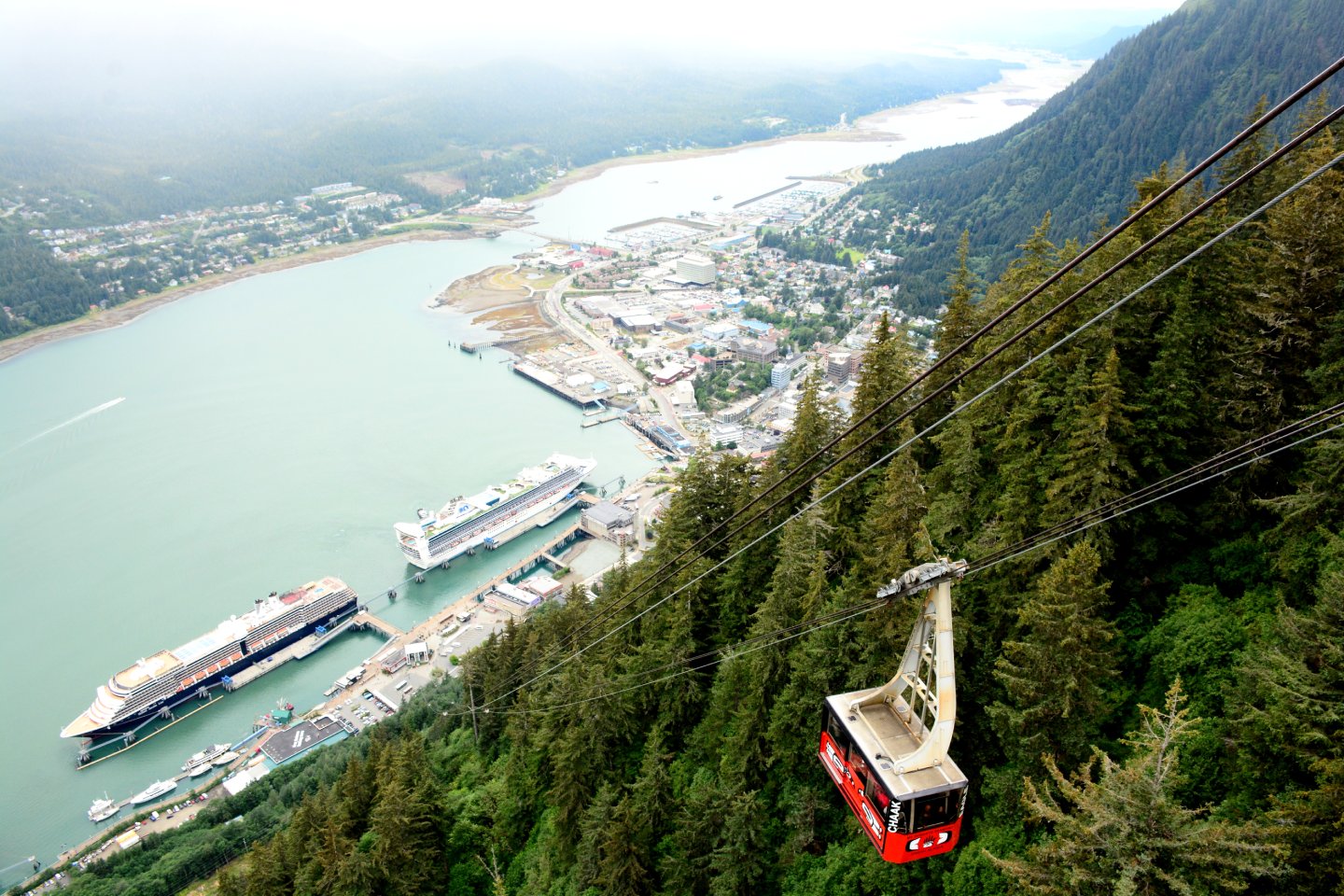
- Alaska – A major seasonal market with departures from Seattle and Vancouver.
- Mexico & West Coast – Itineraries from California to Baja, Mexican Riviera, and Panama Canal.
- New England & Canada – Fall foliage cruises from New York and Boston.
- Hawaii – Year-round and seasonal cruises, often from California or inter-island sailings.

Port Canaveral Leads in LNG Cruise Ships, Supports Florida Jobs
With its year-round operations, Port Canaveral is the preeminent cruise port in North America for cruise ships powered by cleaner-burning liquified natural gas (LNG) and the second busiest cruise port in the world. Some 9 million cruise guests are expected to sail from Port Canaveral next year, and the port anticipates exceeding 10 million passengers by fiscal year 2027.The popular port’s ability to attract the world’s newest and largest cruise ships was built on prescient investments in LNG fueling readiness. LNG is the cleanest-burning fossil fuel readily available. As the cruise industry pursues net-zero cruising by 2050, LNG-powered ships will be able to easily switch to future sustainable fuels, such as bio or synthetic LNG.For cruise guests, Port Canaveral is an easily accessible destination. About 85% of passengers drive to the port for their cruise vacations. These drive-in market guests, and guests who fly in too, visit local beaches, restaurants, and attractions and stay at local hotels.In addition to cruise and cargo operations, Port Canaveral has recreation options, including its own Jetty Park beach – a popular spot to watch space launches or passing cruise ships. The port has commercial fishing and local seafood outlets, aerospace and military operations, restaurants and retail shops, public boat ramps, marinas, and more.Among the 20 homeported cruise ships in Port Canaveral are some of the newest and largest LNG-powered ships from Carnival Cruise Line, Royal Caribbean, and Disney Cruise Line. Royal Caribbean launched the world’s largest cruise ship, the 250,000-ton Star of the Seas, from Port Canaveral in August 2025.LNG LeaderPort Canaveral was the first North America homeport to accommodate cruise ships powered by LNG. Capt. John W. Murray, CEO and Port Director of Port Canaveral, who joined the port in 2016 from the commercial ocean carrier side of the maritime industry, was studying cruise industry trends and observed that several new cruise ships under construction would be powered by LNG, a first for the industry. Murray saw LNG as a way for the port to distinguish itself and attract the cruise industry’s largest and most innovative ships.“I started asking questions,” Murray says. “I knew if we figured out the ‘how’ in terms of LNG fueling of passenger vessels, those new ships might come to Port Canaveral. It took more than five years and considerable effort to develop bunkering best practices and protocols and specialized safety and firefighting capabilities to get to a point where it worked.”The LNG bunkering practice developed by Port Canaveral has become the prototype for ports around the world. The first LNG-powered cruise ship arrived at the port in 2021, Carnival Cruise Line’s Mardi Gras – which debuted as the first ship in North America to run on LNG. The ship operates from Cruise Terminal 3, built to accommodate Carnival Excel-class ships.Five LNG-powered ships are now homeported in Port Canaveral – Disney Wish and Disney Treasure, Mardi Gras, and Royal Caribbean’s Utopia of the Seas and Star of the Seas. Coming in 2027 are MSC World Atlantic and Carnival’s Festivale, bringing the number to seven – as Port Canaveral continues as an LNG leader.In addition to these lines, homeporting ships in Port Canaveral are Norwegian Cruise Line, Princess Cruises, and Celebrity Cruises. Ships also visit as a port of call or to provision. Passengers book shore excursions such as a tour to see the NASA Kennedy Space Center.Port Canaveral Benefits FloridaThe thriving port is a significant economic driver for Central Florida and the entire state, accounting for $6.1 billion in statewide economic impact and nearly 43,000 jobs. The port and its business segments deliver some $2.1 billion in wages and $189.5 million in state and local taxes.“We’re providing jobs in the State of Florida and Florida-based businesses benefit from port operations,” says Captain Murray. “When you have a ship with thousands of people onboard, they are getting all of their food supplies, laundry and everything else for a whole week delivered, and all of that is provided from local vendors and suppliers.”As cruise grows, so do local businesses. “The cruise industry is a vital and fast-growing part of Central Florida’s economy, and we’ve been growing every step of the way,” says Janne Meinertz, president of Cape Canaveral, Fla.-based American Cruise-Aid Logistics.Eric Garvey, CMO of a local hospitality group, says, “Cruising from Port Canaveral is not just holding steady—it’s thriving. Transportation services, hospitality partners, and local businesses are all feeling the positive impact of this growth.”© 2026 Cruise Lines International Association (CLIA). All rights reserved.This content may be shared or republished with clear attribution to Cruise Lines International Association (CLIA). Content must remain intact and may not be altered, edited, or excerpted in any way that changes its meaning or context. For additional permissions, media inquiries, or additional information, please email [email protected] 18 May, 2026
Vacation Matchmakers: Travel Advisors Are Key to Cruise Industry Success
Travel advisors are both the cruise industry’s biggest supporters and vacationers’ most trusted allies when it comes to the ultimate success of a cruise vacation.Whether travelers are looking to cruise for the first time or already fans, they turn to travel advisors for their knowledge and experience. In fact, 79% of cruise travelers say travel agents have a “meaningful impact on their decision to cruise,” according to Cruise Lines International Association’s 2025 State of the Cruise Industry Report. Only friends and family have more sway.“Travel advisors are the principal distribution channel for cruise lines, producing a majority of cruise bookings worldwide, and they offer unique value that ensures that their clients (the cruise lines’ guests) keep coming back,” says Charles Sylvia, ECC, CLIA’s VP, Industry & Trade Relations.Cruise passengers report being happiest with their experience when they book their holiday with a professional travel advisor.Travel advisors are matchmakers for cruise lines and vacationersAdvisors start by creating consumer awareness about the benefits of cruising, guiding travelers to consider a vacation at sea.A knowledgeable advisor can then direct clients to the best cruise line and itinerary for their vacation preferences. “Most consumers haven’t a clue what options will best serve them, but a travel advisor will ask the right questions and learn about their clients’ needs, wants, and expectations to align them with just the right cruise line, itinerary, ship, category, etc.,” says Sylvia.Pair the right ship with the right guest, and that traveler will have a better vacation experience. Cruise travelers who booked with a travel advisor rated their vacation and cruise line higher than those who booked independently, according to CLIA.High satisfaction rates lead to future bookings, and 82% of past cruisers intend to book another sailing – in many cases thanks to smart guidance from their travel advisor.Advisors offer valueCruise travelers often seek out travel advisors because they want the best cruise deal. Advisors deliver by leveraging promotional group rates and supplier relationships and pointing clients toward high-value sail dates, cabin options, and booking promotions.But that’s not all they offer. Advisors make sure their clients get the specialty restaurant reservations they desire, that their shore excursions get booked, and that they understand how to make onboard bookings for shows and activities. They can also arrange pre- and post-cruise travel and support their clients while they’re in transit between their home and the ship.“My travel advisor cares about my total cruise experience from when I leave my house to when I return home,” says Sylvia. “That level of client care and painstaking attention to detail is what keeps clients coming back to the same trusted travel advisor and to cruise travel.”How CLIA supports its travel advisor and agency membersCLIA’s North America Travel Trade Membership team supports more than 74,000 travel advisor members with professional development opportunities. There are also regional memberships in Australasia, Brazil, the UK and Ireland. When travel advisors can maximize their cruise sales and grow their portfolio of loyal clients, everyone benefits.Professional development options for agents include a robust catalog of online courses and various specialized certificate programs (with both virtual and in-person training). The top offering is CLIA Certification, the cruise industry’s only official professional designation, focused on how to sell and market cruises to grow a travel business. Multiple levels of accreditation accommodate travel advisors at different stages of their careers.CLIA’s professional development content is so well regarded that it’s used in university hospitality programs throughout North America, Sylvia notes.Live events such as CLIACruise360 conferences and more intimate gatherings bring travel advisors and cruise line representatives together for networking and discussion of new ships and cruise industry trends.A thriving, educated travel advisor community benefits both the cruise lines, and the nearly38 million travelers expected to cruise globally this year.“I believe travel advisors are the leading contributor to the growth and success of our industry,” says Sylvia. “They are the face of cruise travel and our most valuable champions.”© 2026 Cruise Lines International Association (CLIA). All rights reserved.This content may be shared or republished with clear attribution to Cruise Lines International Association (CLIA). Content must remain intact and may not be altered, edited, or excerpted in any way that changes its meaning or context. For additional permissions, media inquiries, or additional information, please email [email protected]. 18 May, 2026
Cruise Lines Focus on Sustaining the Future of Coral Reefs
Cruise Lines International Association (CLIA) members are working on innovative and ambitious ways to sustain and grow coral reefs, key marine habitats that are among the most diverse ecosystems on the planet, and extremely vulnerable to warming ocean temperatures. CLIA places environmental sustainability among its top priorities, including the health of the oceans.CLIA member cruise lines are taking a leading role as an energizing force for change, partnering with marine science organizations and universities in coral reef restoration initiatives. Member lines are also focused on public engagement and helping guests understand the need to preserve and sustain coral reefs.These are among the ambitious cruise line-sponsored projects underway.MSC Cruises is involved in the preservation and growth of coral species through the MSC Foundation’s “Super Coral Reefs Programme,” which is playing an important role in revitalizing coral populations, including the critically endangered elkhorn and staghorn corals. Among projects, MSC is supporting the growth of coral trees. Once they reach a certain level of growth, the coral trees are transplanted into MSC’s offshore nursery of Ocean Cay, MSC’s private Bahamas island, and eventually to coral reefs. Under development is a scalable model that MSC hopes will aid coral reef restoration worldwide. Partners include Bahamian and international scientists, universities, and conservation organizations, with research shared in scientific publications. In 2025, MSC opened a Marine Conservation Centre on Ocean Cay, its private island in the Bahamas. The facility includes 22 coral tanks used for growth and scientific study by marine scientists and students. Cruise guests have the opportunity to visit the center to gain a greater understanding of the importance of healthy coral.Royal Caribbean Group has joined with the Inter Miami CF soccer team and the University of Miami Rosenstiel School of Marine, Atmospheric, and Earth Science to support the school’s citizen science program, Rescue a Reef, in South Florida. The triad focuses on bringing back the growth of marine invertebrates in more than 1,000 coral colonies off Miami. Royal Caribbean Group also underwrites coral restoration work with the Marine Resilience & Sustainability Center (MARES), dedicated to restoring the biodiversity of the Caribbean Sea. The center’s work has included the rehabilitation and repair of nearly 50 acres of delicate marine ecosystems. In addition, Royal Caribbean has placed “reef balls,” also known as “bay balls” – which mimic natural reefs as habitats for marine life – near Perfect Day at CocoCay, the cruise line’s private island in the Bahamas. These balls, weighing some 1,750 pounds, help create a home for coral and sustain its growth.Disney Cruise Line plays a key role in coral reef restoration through the Disney Conservation Fund (DCF), which supports the Coral Reef Foundation, the world’s largest non-profit focused on restoring coral reefs. Disney’s work has blossomed from its initial efforts in planting a few thousand corals in Florida’s Coral Reef to a program that now numbers in the tens of thousands of corals. The cruise company has also helped create a Pillar Coral Recovery Project focused on growing and preserving Pillar corals, a somewhat rare species that the U.S. National Oceanic and Atmospheric Administration (NOAA) Fisheries describes as cigar-like clusters growing upward. In addition, DCF has also supported work in coral genetics, and education efforts including “Coral Reefs and You,” a student education program, which educates on the importance of coral reefs, including on local economies, and stresses the need for conservation efforts.Windstar Cruises is involved in coral reef restoration though a partnership with Coral Gardeners, an organization based in French Polynesia’s Moorea, part of the Windward Islands, about 11 miles northwest of Tahiti. The organization’s goal is to restore reefs through “innovative coral farming and transplantation.” The program began on Windstar’s 312-passenger Star Breeze in 2022, with Windstar adopting 1,000 corals and encouraging guests cruising Tahiti to do the same for a $35 per person donation. Since then, Windstar has encouraged guests on any itinerary to adopt a coral, which they can gift to friends or family. More than 3,500 corals have been adopted. A goal of the line is a dedicated coral nursery. Windstar also takes interested guests in French Polynesia on an excursion to see what Coral Gardeners does. They are introduced to staff who educate them about growing coral and steps taken towards restoring reefs.© 2026 Cruise Lines International Association (CLIA). All rights reserved.This content may be shared or republished with clear attribution to Cruise Lines International Association (CLIA). Content must remain intact and may not be altered, edited, or excerpted in any way that changes its meaning or context. For additional permissions, media inquiries, or additional information, please [email protected]. 18 May, 2026
Attending Major World Events Is Seamless on a Cruise
Taylor Swift put a spotlight on event-based travel, but cruise lines have long been offering guests front row seats to major world events, such as the Monaco Grand Prix and Carnival in Rio de Janeiro, and nature-based delights such as Japan’s cherry blossom season.“Cruising makes attending major world events seamless,” says Nico Corbijn,Chief Administrative Officer of Azamara Cruises. “Transportation, accommodations, dining, and curated experiences are integrated, allowing travelers to focus on the moment itself instead of the planning complexities that often accompanythese high-demand events.”Taking a cruise to a major event eliminates for guests the need to book overpriced hotels months in advance or navigate the complexities of ticket booking systems. It also embeds the big-draw event within a larger exploration of the region. The shipboard enrichment team typically offers programming to give context to the events on land, enhancing the experience.These event-themed itineraries benefit the cruise lines as well, as they often attract new-to-cruise and new-to-brand guests. “Travelers are drawn in by the event or passion point first... and only secondarily by the idea of cruising,” says Corbijn. “That reframesthe purchase decision and brings in people who may not have otherwise considered a cruise.”Cultural eventsA great way for travelers to immerse themselves in a destination’s culture is to experience its festivals, religious events, and national holidays. Members of the Cruise Lines International Association (CLIA) take note to align itineraries with these experiences.As an example, cruise lines make it easy for guests to experience the brightly colored, high-energy spectacle that is Carnival in Rio de Janeiro. Silversea Cruises, for one, offers excursions that include transportation to the stadium where the Samba Parade takes place, with either grandstand or box seat tickets to the popular event. In addition to Carnival, Azamara Cruises also plans sailings around Holy Week in Brazil.Cruise lines also go beyond the big-name celebrations. “We bring guests to iconic moments, but we also go further, opening the door to the traditions, festivals, and everyday cultural moments that are known mostly by locals,” says Bert Hernandez, President of Silversea Cruises. These include Andalusia, Spain’s weeklong Feria de Málaga summer fair and Japan’s Awa Odori dance festival. “These lesser‑known celebrations offer an intimate window into local life,” Hernandez says.River cruise lines deliver easy access to Europe’s famous Christmas Markets. Guests visit multiple iconic holiday markets along the Danube and Rhine, the ships often docking within walking distance of the main attractions.Sporting eventsThe most popular worldwide sporting event to cruise to is the Monaco Grand Prix. Silversea Cruises, Crystal Cruises, Windstar Cruises, and Azamara Cruises are among cruise lines offering sailings to the iconic Formula 1 race. Explora Journeys’ 922-passenger Explora I will take up residence in Monaco’s Port Hercule from June 3 to 8, 2026, and offer guests three-day Grandstand or F1 Paddock Club access to all the races.Golf fans can cruise to events too. Azamara Cruises, in partnership with PerryGolf, for instance, offers access to the British Open, as well as tee times at top courses in the U.K.Cruise lines such as Carnival Cruise Line and Princess Cruises plan cruises around tennis’s Australian Open.Nature-based eventsSolar eclipse travel has exploded in popularity and many cruise lines are putting ships in position for the August 2026 eclipse. Cruise ships are the ideal base for eclipse viewing because the ships can adjust their position at sea to be directly in the path of totality. Princess Cruises, Virgin Voyages, Crystal Cruises, and Royal Caribbean International are among lines providing guests opportunity to watch this year’s celestial show off the coast of Spain. Celebrity Cruises, Holland America Line, and Cunard will base ships in Icelandic waters, while guests on expedition line Quark Expeditions can watch from Greenland.Attractions such as Japan’s cherry blossoms and the fall colors in Canada and New England also draw cruisers. Regent Seven Seas Cruises, Seabourn, and Princess Cruises are among the lines positioning ships in Japan for peak bloom, while Holland America Line and American Cruise Lines have long offered fall foliage cruises in North America.© 2026 Cruise Lines International Association (CLIA). All rights reserved.This content may be shared or republished with clear attribution to Cruise Lines International Association (CLIA). Content must remain intact and may not be altered, edited, or excerpted in any way that changes its meaning or context. For additional permissions, media inquiries, or additional information, please email [email protected]. 18 May, 2026
Modern Cruise Terminals: Designing the Future of Cruise, On Land
Cruise lines today recognize that the cruise experience begins on land, at the pier, before anyone ever sets foot on a ship. As a result, members of the Cruise Lines International Association (CLIA) and partners are investing in state-of-the-art, custom-designed cruise terminals that aim to both please the eye and move passengers from shore-to-ship with record ease.MSC Cruises’ new record-breaking terminal at PortMiami, which opened in the spring of 2025, was designed by Arquitectonica, the award-winning design firm that also created the Kaseya Center, where the Miami Heat play. Constructed by Fincantieri Infrastructure, a division of Italian shipbuilder Fincantieri Group, the terminal features a striking design with sweeping lines and massive walls of glass – not to mention an ability to process up to 36,000 passengers per day.Just to the west, PortMiami’s Terminal B was built by Norwegian Cruise Line, and opened in 2020. Inspired by a nautilus shell – and known as “The Pearl of Miami” for its distinctive curved design and colorful, illuminated walls of glass – the award-winning 190,000-square-foot structure is LEED Gold Certified for its sustainability and green efforts.Also in Florida, in 2021 Port Canaveral opened the ground-breaking Cruise Terminal 3, in conjunction with the launch of Carnival Cruise Line’s Mardi Gras – the first ship in North America to run on cleaner burning Liquified Natural Gas (LNG). The state-of-the-art facility is known as “Terminal Launch Pad,” reflecting the region’s ties to America’s space program.New tech enhances guest experiencesAs modern cruise terminals excite the eye, new technology is also improving the passenger experience.More than ever before, cruise terminals are equipped with new technology to swiftly embark and disembark thousands of passengers on turnaround days.Facial recognition technology allows guests to board and leave their cruise ships without the need to show passports or other documentation. With your information already on file, you just look at a screen – including to clear U.S. Customs and Immigration post-cruise.It’s estimated that the use of facial biometrics can reduce embarkation time by up to 50 percent – a monumental achievement considering today’s newest megaships hold 4,000-plus passengers.Other innovations include airport-style security scanners that streamline the security process, and digital signage that allows messaging to be updated and reproduced in multiple languages, instantly. For cruise lines catering to many passenger demographics and languages, signage flexibility is a crucial element of the passenger experience.Construction underway around the worldThe exciting new cruise terminal boom isn’t just confined to Miami. New terminals also include MSC’s new $156-million facility in Galveston, Texas – the fourth terminal in the city, with 165,000 square feet of space, a seven-story parking garage for guests (a first for Galveston), and two boarding bridges. The terminal hosts MSC and Norwegian Cruise Line ships.Next year, the port of Ravenna, Italy – which serves as a gateway to nearby Venice and Bologna – will open its first new terminal, designed in conjunction with Cruise Terminals International and Royal Caribbean Group. Available to all cruise lines, the nearly 11,000-square-foot facility will be the first LEED-certified cruise terminal in Italy, complete with onshore power supply (OPS), so cruise ships can plug into local power supply and reduce emissions in port.Antigua and Barbuda is cementing its status as a Caribbean homeport with a brand-new, modern terminal featuring such amenities as a day club with swimming pool and cabanas, dining and retail, and enhanced check-in and security areas. Partners for the project include Global Ports Holding (GPH). British line P&O Cruises’ homeported Arvia arrived at the new Antigua Cruise Port in November 2025. Full project completion is expected by June 2026.The city of Philadelphia is getting its own cruise terminal: the PhilaPort Cruise Terminal broke ground in December 2025 in preparation for the 2026 debut for Norwegian Cruise Line’s Norwegian Jewel. Norwegian Cruise Line has an exclusive seven-year agreement to homeport at the port, which is conveniently adjacent to the Philadelphia International Airport.© 2026 Cruise Lines International Association (CLIA). All rights reserved.This content may be shared or republished with clear attribution to Cruise Lines International Association (CLIA). Content must remain intact and may not be altered, edited, or excerpted in any way that changes its meaning or context. For additional permissions, media inquiries, or additional information, please email [email protected] 01 May, 2026